

Today, we will talk about the injection molding for household appliances. Injection molding plays a vital role in the manufacturing of modern household appliances. From refrigerators and washing machines to coffee makers, vacuum cleaners, and smart kitchen devices, injection-molded plastic components are everywhere.
These parts must meet strict requirements for durability, safety, heat resistance, aesthetics, and cost efficiency—all while being produced at scale.
This end-to-end guide explores how injection molding is used in household appliance manufacturing, covering materials, mold design, production processes, quality standards, cost factors, and emerging trends. Whether you are an appliance brand, OEM, or product engineer, understanding injection molding is essential to building reliable, competitive products.
Why Injection Molding Is Essential for Household Appliances
Household appliances demand high-volume, consistent, and cost-effective production of complex plastic parts. Injection molding meets these requirements better than any other manufacturing method.
Key reasons injection molding dominates appliance manufacturing include:
- Excellent dimensional accuracy and repeatability
- Ability to mold complex geometries in a single process
- Wide material selection for mechanical, thermal, and electrical needs
- Superior surface finish for visible components
- Low per-unit cost at medium to high volumes
Injection molding allows manufacturers to balance performance, appearance, and production efficiency—critical factors in the highly competitive appliance market.

Common Injection-Molded Parts in Household Appliances
Injection molding is used for both structural and cosmetic components across almost all appliance categories.
Large Household Appliances
- Washing machine control panels
- Refrigerator interior liners and drawers
- Dishwasher racks and housings
- Air conditioner casings and vents
Small Household Appliances
- Coffee machine housings
- Blender and food processor enclosures
- Vacuum cleaner shells
- Electric kettle handles and bases
- Hair dryer bodies
Internal and Functional Components
- Switch housings
- Electrical connectors
- Motor covers
- Insulation supports
- Cable management components
Each part has different requirements for strength, heat resistance, flame retardancy, and aesthetics.
Key Material Requirements for Appliance Injection Molding
Material selection is critical in household appliance manufacturing. Plastics must perform reliably under heat, moisture, vibration, electrical load, and long-term use.
Common Plastics Used in Household Appliances
ABS (Acrylonitrile Butadiene Styrene)
ABS is one of the most widely used materials in appliance injection molding.
Advantages:
- Excellent surface finish
- Good impact resistance
- Easy coloring and texturing
- Cost-effective
Applications:
- Control panels
- Decorative housings
- Appliance covers

Polypropylene (PP)
PP is valued for its flexibility and chemical resistance.
Advantages:
- Lightweight
- Excellent fatigue resistance
- Moisture and chemical resistance
- Recyclable
Applications:
- Washing machine tubs
- Internal brackets
- Food-contact components
Polycarbonate (PC)
Polycarbonate is used when strength and heat resistance are required.
Advantages:
- High impact strength
- Heat resistance
- Transparency options
- Dimensional stability
Applications:
- Transparent covers
- Safety shields
- Electrical housings
PC/ABS Blends
PC/ABS combines the strengths of both materials.
Advantages:
- Balanced toughness and aesthetics
- Improved heat resistance
- Good processability
Applications:
- Premium appliance housings
- Smart appliance enclosures
Nylon (PA6 / PA66)
Nylon is used for structural and load-bearing components.
Advantages:
- High mechanical strength
- Wear resistance
- Heat resistance
Applications:
- Gears
- Motor mounts
- Structural brackets
Flame-Retardant Plastics
Many appliance components must meet fire safety standards.
Common flame-retardant materials include:
- FR-ABS
- FR-PC
- FR-PA
- PBT
These materials comply with UL94 and other safety certifications.
Injection Mold Design Considerations for Appliances
Household appliance molds tend to be large, complex, and high-cavity, making mold design a critical success factor.
Wall Thickness and Structural Design
Uniform wall thickness is essential to avoid:
- Sink marks
- Warpage
- Internal stress
Designers often reinforce parts with ribs and gussets instead of thick walls.
Surface Finish and Aesthetics
Visible appliance parts require a consistent appearance.
Common finishes include:
- High-gloss polish
- Matte textures
- Leather-grain textures
Texturing also helps hide flow marks and scratches.
Gate and Runner Design
Gate location affects appearance and strength.
Common gate types for appliance parts:
- Edge gates
- Fan gates
- Hot runner valve gates
Hot runner systems are widely used to reduce material waste and improve cycle time.

Cooling System Design
Large appliance molds require highly efficient cooling.
Optimized cooling:
- Reduces cycle time
- Improves dimensional stability
- Minimizes warpage
Conformal cooling is increasingly used for complex appliance molds.
Ejection System Design
Appliance parts often have large surface areas and deep ribs, requiring:
- Multiple ejector pins
- Stripper plates
- Air ejection systems
Proper ejection prevents deformation and surface damage.
The Process of Injection Molding for Household Appliances
The production process must be stable and repeatable.
Step 1: Mold Setup and Material Preparation
- Material drying (especially for PC and nylon)
- Mold temperature stabilization
- Machine parameter setup
Step 2: Injection and Packing
Molten plastic is injected into the mold under high pressure. Packing pressure compensates for shrinkage and ensures full cavity filling.
Step 3: Cooling and Solidification
Cooling time often dominates the cycle for large appliance parts.
Proper cooling ensures:
- Dimensional accuracy
- Flatness
- Reduced internal stress
Step 4: Ejection and Inspection
Parts are ejected and visually inspected. Automated inspection is often used for high-volume production.
Quality Standards and Compliance in Appliance Injection Molding
Household appliance parts must comply with international safety and quality standards.
Common Standards
- ISO 9001
- ISO 14001
- UL94 (flammability)
- RoHS and REACH
- FDA (for food-contact parts)
Consistent quality control is essential to meet OEM and regulatory requirements.
Cost Factors in Appliance Injection Molding
Several factors influence cost:
- Mold size and complexity
- Number of cavities
- Material type
- Surface finish requirements
- Production volume
- Assembly and post-processing
While tooling costs can be high, per-unit cost becomes very low at scale.
Automation and High-Volume Production
Household appliance manufacturing often relies on automation.
Common automation solutions include:
- Robotic part removal
- Automated assembly
- In-line inspection systems
- Conveyor-based production lines
Automation improves consistency and reduces labor costs.
Sustainability and Eco-Friendly Appliance Manufacturing
Sustainability is increasingly important in the appliance industry.
Sustainable Injection Molding Practices
- Use of recycled plastics
- Lightweight part design
- Energy-efficient molding machines
- Reduced scrap through hot runner systems
Many appliance brands now prioritize environmentally responsible suppliers.
Injection Molding vs Alternative Manufacturing Methods
Injection Molding vs Thermoforming
- Injection molding offers better precision and strength
- Thermoforming is suitable for very large, thin parts
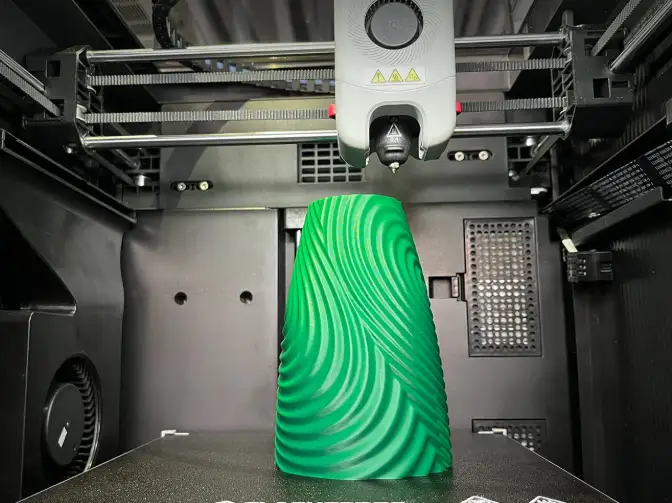
Injection Molding vs 3D Printing
- Injection molding is ideal for mass production
- 3D printing is best for prototypes and low volumes
For household appliances, injection molding remains the most practical solution.
Challenges of Injection Molding for Household Appliances
Common challenges include:
- Warpage in large parts
- Sink marks in thick sections
- Cosmetic defects on visible surfaces
- Long cycle times
- Tight delivery schedules
Experienced mold design and process control are essential to overcome these challenges.
Choosing the Right Injection Molding Partner for Appliances
A reliable partner should offer:
- Appliance-specific molding experience
- In-house mold design and fabrication
- Material and regulatory expertise
- Scalable production capacity
- Strong quality control systems
Long-term collaboration improves efficiency and product quality.
Future Trends in Injection Molding for Household Appliances
- Smart appliances are driving complex housing designs
- Increased use of flame-retardant and high-temperature plastics
- Integration of metal inserts and electronics
- Digital mold monitoring and process optimization
- Greater focus on recyclability and sustainability
Injection molding continues to evolve alongside household appliance innovation.
Conclusion
Injection molding is the backbone of household appliance manufacturing, enabling the production of durable, safe, and visually appealing plastic components at scale. From material selection and mold design to high-volume automated production, every step must be carefully optimized to meet the demanding requirements of modern appliances.
By working with experienced injection molding partners and applying best practices in tooling, materials, and quality control, appliance manufacturers can deliver reliable products while maintaining cost efficiency and sustainability.
As appliances become smarter and more design-driven, injection molding will remain a critical technology shaping the future of the industry.