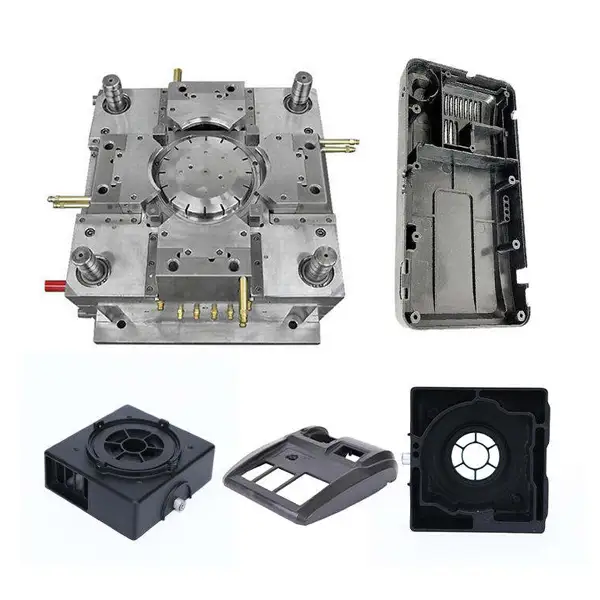
Custom injection molded plastic components with AIM plastic, with design and engineering support, OEM, ODM, injection mold making, competitive price
Injection molded plastic components are everywhere. From the smallest electronic connectors and precision molded plastic parts to large automotive housings and structural automotive parts, this plastic injection molding technique quietly supports almost every modern industry.
Whether it is consumer electronics, industrial equipment, or medical devices, injection-molded plastic parts are widely used to produce plastic components at scale.
Yet despite how common injection molding is, many buyers, engineers, and product teams still misunderstand how injection molded plastic components are designed, manufactured, and optimized for performance, quality, and cost.
[bg_collapse_level2 view=”link” color=”#e34507″ icon=”arrow” expand_text=”Read More” collapse_text=”Read Less” ]
This guide breaks it all down—clearly and practically. No fluff. No textbook theory for the sake of theory. Just how injection molded plastic components actually work in real manufacturing environments, how the plastic injection molding process operates inside an injection molding machine。
What affects molded part quality, how molding defects occur, how mold design influences performance, and why injection molding remains one of the most powerful and cost-effective manufacturing plastic parts methods in the world.
Injection molded plastic components are plastic parts produced by injecting molten plastic material into a precision-machined mold cavity. In this injection molding process, plastic is forced under injection pressure through the injection unit of an injection molding machine and injected into the mold.
Once the plastic has cooled and solidified inside the mold, the mold opening sequence begins, and the finished molded plastic component is ejected.
This common injection molding technique allows manufacturers to create:
Complex geometries using advanced mold design
Tight tolerances through precision injection molding
Consistent, repeatable injection-molded parts manufacturing
High-volume plastic molding with low per-unit cost
Unlike machining or fabrication, plastic injection molding forms the entire plastic part in one molding cycle. There is no cutting away material. The melted plastic flows into the injection mold, fills every cavity detail, rib, and feature, and becomes the final injection molded plastic part.
That efficiency is why injection molded plastic components dominate injection molding applications across automotive parts, medical devices, consumer goods, electronics housings, plastic bottles, packaging, and industrial plastic components.
Injection molding did not become the most common injection molding technique by accident. It solves several manufacturing challenges at the same time while supporting hundreds of plastic materials suitable for injection.
Injection molding is suitable for injection at both low-volume injection molding and high-volume plastic molding scales. While mold tooling—whether steel or aluminum mold—requires upfront investment, once the injection mold exists, producing tens of thousands or millions of identical injection molded plastic parts becomes highly efficient.
This scalability makes custom plastic injection molding ideal for both prototype production of parts and long-term mass manufacturing plastic parts.
Modern injection molds are CNC-machined mold components designed for extremely tight tolerances. When injection pressure, temperature, and molding systems are correctly controlled, the injection molding machine produces injection molded plastic components with excellent dimensional accuracy.
This precision is critical for:
Snap-fit plastic components
Medical injection molded plastic parts
Electrical housings and connectors
Automotive safety and structural parts
Repeatability is one of the biggest advantages of thermoplastic injection molding.
Injection molded plastic components allow engineers to integrate multiple features directly into a single molded part through smart mold design.
These include undercuts, ribs, bosses, threads, textures, surface finishes, branding details, and functional geometry that would otherwise require secondary operations.
By using advanced plastic part molding techniques, manufacturers reduce assembly steps and improve overall product reliability.
Plastic injection molding supports hundreds of plastic materials, including commodity plastics, engineering plastic materials, reinforced plastic components, and high-performance plastics. Different types of injection moulding material can be selected based on strength, heat resistance, chemical exposure, or regulatory requirements.
Material selection is a core component of the injection molding process. The plastic material chosen directly affects mechanical performance, durability, cost, cycle time, and the likelihood of molding defects.
Polypropylene molded components are lightweight, chemically resistant, flexible, and low cost. PP is a type of plastic commonly used to produce plastic containers, caps, automotive interior parts, medical disposables, and packaging components.
ABS injection molded parts offer strong impact resistance, good surface finish, and balanced mechanical properties. ABS is widely used for consumer electronics housings, appliance components, and automotive trim parts.
Polycarbonate is a high-performance plastic known for impact resistance, optical clarity, and heat resistance. It is commonly used for lenses, safety shields, transparent covers, and electrical plastic components.
Nylon injection molded components provide high strength, wear resistance, and excellent mechanical properties. Nylon is suitable for injection molding gears, bushings, structural automotive parts, and industrial components exposed to stress and heat.
POM offers low friction, high dimensional stability, and excellent fatigue resistance. It is widely used in precision injection molded plastic parts such as gears, connectors, and moving components.
Choosing the wrong injection moulding material can lead to delamination as the materials cannot bond, poor surface quality, warping, or premature failure. Material selection must always consider mechanical load, temperature, chemical exposure, and whether materials cannot bond under certain molding conditions.
Understanding each stage of the plastic injection molding process explains why certain mold design rules, molding techniques, and process controls exist.
Plastic resin pellets—selected from materials for injection molding—are prepared before entering the injection unit. Many thermoplastic polymers must be dried to remove moisture. If not properly dried, molding defects such as bubbles, delamination, or weak bonding can occur during the injection process.
The pellets enter the barrel of the injection molding machine, where a rotating screw applies heat and shear to create melted plastic. This molten plastic must be uniformly heated to ensure consistent flow behavior during injection.
The molten plastic is injected into the mold under high injection pressure. During this stage, plastic is forced through runners and gates, filling the cavity with molten plastic into the mold. Proper injection pressure to fill the mold is critical to avoid short shots, weld lines, or incomplete filling.
Once injected, the plastic has cooled inside the injection mold until it solidifies. Cooling time largely determines the molding cycle length. Efficient cooling channels in mold design for plastic components are essential for cycle optimization and part quality.
After the plastic has cooled sufficiently, mold opening occurs, and ejector systems push the finished injection molded plastic component out of the mold. The injection molding machine then closes the mold, and the molding cycle repeats.
Depending on part size, wall thickness, mold components, and the type of injection moulding used, each cycle can range from a few seconds to over a minute.
Good design is the difference between a smooth injection molding production run and constant manufacturing process problems. In injection molding, small design mistakes can lead to defective parts, unstable repeatable molding processes, or poor reliability of the injection molding over hundreds of thousands of parts.
Uniform wall thickness is critical in injection mold design because molten plastic must flow evenly into the mold cavity.
Uneven wall thickness causes:
Sink marks
Warping
Internal stress
These issues occur because hot plastic cools at different rates inside the mold halves. Designers should aim for consistent wall thickness throughout the molded plastic parts whenever possible to maintain dimensional accuracy in molding and plastic part consistency.
Draft angles allow the molded plastic part to release cleanly from the mold cavity without damage during mold opening.
Typical draft: 1–2 degrees
Textured surfaces may need more
Without a draft, the plastic part sticks to the mold surface, increasing wear on mold components and causing surface finish injection molding issues. Ignoring draft is one of the most common injection molding beginner mistakes.
Ribs add strength without increasing excessive plastic resin usage.
Rib thickness: ~50–70% of wall thickness
Proper rib spacing avoids sink marks
Using ribs instead of thick walls reduces material cost, improves cooling, and helps injection molding can produce high-quality parts more consistently—especially for small parts and thin-walled plastic products.
Sharp corners restrict flow into the mold and concentrate stress. Rounded fillets improve strength, plastic flow, and reduce molding defects during events during the injection.
Bosses are used for screws or fasteners in many molded plastic parts. Poor boss design causes cracking, sink marks, or weak fastening points. Proper support ribs, spacing, and alignment with mold cavity geometry are critical for defect-free molded components.
The injection mold is the heart of injection molding production. Tooling quality directly affects surface finish, part consistency, and how many parts are made before wearing.
P20 steel: common for medium-volume production
H13 steel: high durability for long production runs
Aluminum mold: cost-effective for rapid tooling for plastic components and prototypes
The choice depends on volume requirements or larger components, cycle time expectations, and cost-effective plastic molding goals.
Single-cavity molds: lower upfront cost, slower output
Multi-cavity molds: higher upfront cost, higher number of parts made
Multi-cavity injection mold design is ideal for mass production plastic parts and scalable injection molding solutions.
Hot runners reduce waste and improve molding cycle efficiency
Cold runners are simpler but generate scrap
Tooling decisions must align with budget, injection molding production volume, and long-term contract plastic manufacturing plans.
Consistent quality doesn’t happen by accident. It requires tight quality control in injection molding at every stage of the manufacturing process.
Key parameters include:
Injection pressure
Melt temperature
Mold temperature
Cooling time
Even small changes in injection pressure to fill or clamping force that the machine applies can create defective parts or dimensional drift.
Calipers
CMM (Coordinate Measuring Machines)
Optical measurement systems
Tight-tolerance plastic parts require early definition of critical dimensions to maintain dimensional accuracy in molding.
Surface defects to watch for:
Sink marks
Flow lines
Burn marks
Flash
These issues often originate from poor flow into the mold or improper injection of the polymer.
Material traceability ensures reliability, especially for ISO-certified plastic manufacturing serving automotive, medical, and aerospace industries.
Injection-molded plastic components are used to produce plastic parts across nearly every industry.
Interior trim
Connectors
Under-the-hood components
Sensor housings
Automotive plastic components must withstand heat, vibration, and long-term stress. Injection molding is widely used for automotive parts because it produces impact-resistant plastic components with consistent quality.
Syringes
Diagnostic housings
Surgical components
Medical injection molded parts require clean materials, repeatable molding processes, and strict regulatory control.
Phone housings
Chargers
Internal structural components
Electronics enclosure molding demands high surface quality and precise fit.
Enclosures
Gears
Control panels
Industrial plastic components require strength, wear resistance, and long-term reliability.
Caps
Containers
Closures
Packaging plastic parts rely on injection molding to produce hundreds of thousands of parts efficiently from common plastic materials.
Understanding cost drivers helps manage expectations in injection molding production.
Often the largest upfront expense, influenced by:
Injection mold design complexity
Number of mold cavities
Mold material
Tolerance requirements
Engineering plastics cost more but may reduce wall thickness or increase lifespan. Blends of previously developed materials are often used to balance cost and performance.
Shorter molding cycles reduce per-unit cost and increase throughput.
Poor design, unstable processes, or improper flow paths increase scrap.
Painting or assembly increases cost. Many features can be molded directly to avoid post-processing.
Cost optimization focuses on smarter design, not cutting corners.
Optimize wall thickness to reduce material usage
Conduct early Design for Manufacturability (DFM) reviews
Select appropriate tolerances
Use multi-cavity molds for high-volume runs
These strategies improve cost-effective plastic molding without compromising quality.
Sustainability is becoming standard in injection molding.
Post-consumer recycled plastics
Regrind material
Reducing material usage lowers environmental impact.
Modern injection molding machines use significantly less energy.
Avoid unnecessary inserts and mixed materials.
Even experienced manufacturers encounter issues.
Warping results from uneven cooling
Sink marks are caused by thick sections
Short shots occur when melted plastic is forced insufficiently
Flash is often a tooling or clamping issue
Most problems trace back to injection mold design or process control.
A reliable partner ensures high-quality parts and smooth production.
Look for:
Strong DFM support
In-house tooling
Material expertise
Transparent communication
Robust quality systems
Good suppliers help optimize the design of an injection before production.
Smart manufacturing with real-time monitoring
Advanced materials, including bio-based plastics
Micro injection molding for small parts
Automation and robotics
Injection molding continues evolving to meet modern production demands.
Injection molded plastic components remain one of the most efficient and scalable injection molding solutions available today. From automotive and medical to consumer and industrial plastic components, injection molding continues to shape how plastic products are designed and manufactured.
When done correctly—through smart injection mold design, proper material selection, and experienced manufacturing support—injection molded plastic components deliver unmatched value. Low cost per part, consistent quality, and flexibility make injection molding not just relevant, but essential.
If you are developing a new product or scaling production, understanding injection molded plastic components is foundational—not optional.
[/bg_collapse_level2]