

In modern manufacturing, few decisions are as important as choosing the right production technology. Two of the most widely used methods for producing plastic parts today are 3D printing and injection molding. Each technology offers unique advantages, limitations, and ideal use cases.
For product designers, startups, engineers, and manufacturers, understanding when to use 3D printing and when to use injection molding can dramatically impact cost, lead time, part quality, and long-term scalability.
This in-depth guide compares 3D printing vs injection molding, explaining how each process works, its strengths and weaknesses, and how to select the best technology for your specific project.
Understanding the Basics
Before comparing the two technologies, it’s important to understand how each manufacturing process works.
What Is 3D Printing?
3D printing, also known as additive manufacturing, is a process where parts are built layer by layer directly from a digital CAD model. Instead of removing material, 3D printing adds material only where needed.
Common 3D Printing Technologies
- FDM (Fused Deposition Modeling) – Extrudes melted thermoplastic filament
- SLA (Stereolithography) – Uses liquid resin cured by UV light
- SLS (Selective Laser Sintering) – Fuses powdered material with a laser
- MJF (Multi Jet Fusion) – Jet-based powder fusion for production-grade parts
Each method offers different levels of strength, surface finish, and material compatibility.

What Is Injection Molding?
Injection molding is a subtractive-free but tool-based manufacturing process. Molten plastic is injected into a precision-machined mold cavity, cooled, and ejected as a finished part.
Key Characteristics of Injection Molding
- Requires a custom steel or aluminum mold
- Produces highly repeatable, identical parts
- Ideal for medium to high-volume production
- Supports a wide range of engineering plastics
Injection molding has been the backbone of plastic manufacturing for decades.
Key Differences Between 3D printing vs injection molding
| Factor | 3D Printing | Injection Molding |
|---|---|---|
| Tooling Required | No | Yes |
| Setup Cost | Low | High |
| Unit Cost | High (at scale) | Low (at scale) |
| Lead Time | Hours to days | Weeks to months |
| Design Flexibility | Very high | Moderate |
| Part Consistency | Moderate | Very high |
| Production Volume | Low to medium | Medium to high |
Cost Comparison: 3D Printing vs Injection Molding
Upfront Costs
3D Printing
- No tooling required
- Minimal setup cost
- Ideal for startups and early-stage development
Injection Molding
- Requires mold investment
- Tooling costs can range from $2,000 to $100,000+
- Higher initial capital but lower long-term cost
Cost Per Part
- 3D printing costs remain relatively constant per part
- Injection molding costs drop dramatically as volume increases
Rule of Thumb
- Below 500–1,000 units → 3D printing is often cheaper
- Above 5,000–10,000 units → injection molding is usually more economical
Production Volume: Choosing the Right Technology
Low-Volume Production
3D printing excels at:
- Prototypes
- Concept validation
- Pilot production
- Custom or personalized parts
Medium- to High-Volume Production
Injection molding is ideal for:
- Mass-produced components
- Consumer products
- Automotive and medical parts
- Long-term production runs
Speed and Lead Time
3D Printing Lead Time
- No tooling required
- CAD to part in hours or days
- Perfect for rapid iteration
Injection Molding Lead Time
- Mold design and fabrication can take 3–8 weeks
- Production itself is very fast once tooling is complete
Best Use
- Need parts tomorrow? → 3D printing
- Need 100,000 identical parts over 2 years? → injection molding
Design Flexibility and Complexity
3D Printing Design Advantages
- Complex internal geometries
- Lattice structures
- Undercuts without tooling concerns
- No draft angles required
- Rapid design changes
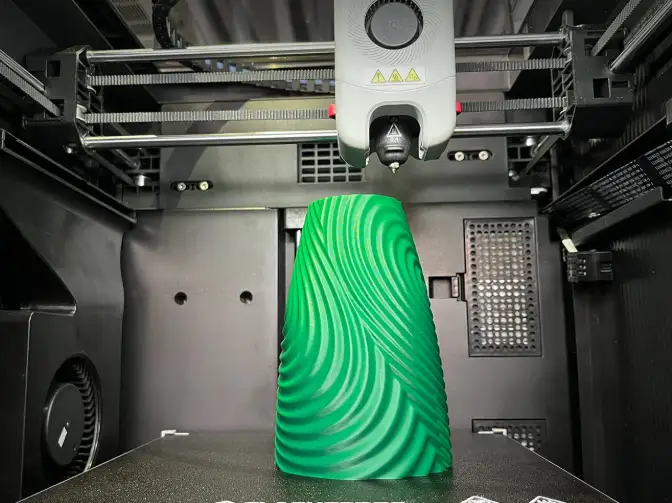
3D printing enables designs that are impossible or extremely expensive with traditional molding.
Injection Molding Design Constraints
- Requires draft angles
- Wall thickness must be controlled
- Undercuts increase tooling complexity
- Mold parting lines must be considered
However, injection molding allows:
- Superior surface finish
- Integrated features
- Consistent mechanical performance
Material Options and Performance
3D Printing Materials
Common materials include:
- PLA
- ABS
- PETG
- Nylon (PA)
- TPU
- Resin-based materials
Limitations
- Fewer true production-grade plastics
- Mechanical properties vary by print orientation
Injection Molding Materials
Injection molding supports a wider range of engineering plastics:
- ABS
- Polycarbonate (PC)
- Nylon (PA6, PA66)
- PP
- POM
- TPU
- Glass-filled and flame-retardant grades

Advantages
- Isotropic strength
- Consistent material properties
- Certified materials available (UL, FDA, medical-grade)
Strength, Durability, and Part Quality
3D Printed Parts
- Layer-by-layer construction can cause anisotropic strength
- Surface finish may require post-processing
- Suitable for functional testing, not always for final use
Injection Molded Parts
- Excellent mechanical strength
- High-dimensional accuracy
- Superior surface finish
- Ideal for end-use products
For load-bearing or safety-critical parts, injection molding is often preferred.
Surface Finish and Aesthetics
3D Printing
- Visible layer lines (especially FDM)
- Post-processing is required for a smooth finish
- SLA and MJF offer better surface quality
Injection Molding
- Smooth, textured, or high-gloss finishes
- Consistent cosmetic appearance
- Suitable for consumer-facing products
Customization and Personalization
3D Printing
- Cost-effective customization
- Ideal for personalized parts
- Each part can be different with no extra cost
Injection Molding
- Customization requires mold changes
- Best for standardized products
- Variations increase cost
Quality Control and Repeatability
Injection molding offers:
- Extremely tight tolerances
- High repeatability
- Statistical process control (SPC)
3D printing provides:
- Good consistency for small batches
- Variation between machines and builds
Sustainability Considerations
3D Printing Sustainability
- Minimal material waste
- On-demand production
- Reduced inventory and logistics
Injection Molding Sustainability
- Efficient material usage at scale
- Recyclable thermoplastics
- Lower energy per part in mass production
Both technologies can support sustainable manufacturing when used appropriately.
Industry Applications
When 3D Printing Is the Best Choice
- Product development and prototyping
- Custom medical devices
- Low-volume spare parts
- Complex internal geometries
- Rapid market testing
When Injection Molding Is the Best Choice
- Consumer electronics housings
- Automotive components
- Medical disposables
- Packaging products
- Long-term mass production
Combining 3D Printing and Injection Molding
Many manufacturers use both technologies together:
- 3D print prototypes
- Validate design and function
- Modify for manufacturability
- Transition to injection molding for mass production
This hybrid approach reduces risk and speeds up time to market.
Decision Guide: Which Technology Should You Choose?
Ask these key questions:
- How many parts do you need?
- How quickly do you need them?
- Is the part for testing or final use?
- What material properties are required?
- Will the design change frequently?
- Is surface finish critical?
Quick Decision Summary
- Prototyping / Low volume / Fast turnaround → 3D Printing
- High volume / Consistency / Cost efficiency → Injection Molding
Future Trends in Manufacturing
- Rapid tooling combined with injection molding
- Production-grade 3D printing materials
- Automated post-processing
- Digital manufacturing workflows
- Sustainable material development
The gap between 3D printing and injection molding continues to narrow, but each will remain essential for different stages of product development.
Conclusion
3D printing and injection molding are not competitors—they are complementary technologies. Choosing the right one depends on volume, budget, lead time, material requirements, and product lifecycle stage.
3D printing offers unmatched speed, flexibility, and low upfront cost, making it ideal for prototyping and low-volume production. Injection molding delivers consistency, durability, and low unit cost at scale, making it the preferred choice for mass production.
By understanding the strengths and limitations of each method, manufacturers can make informed decisions, reduce costs, and bring better products to market faster.