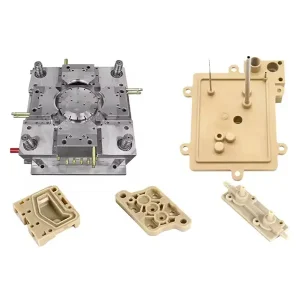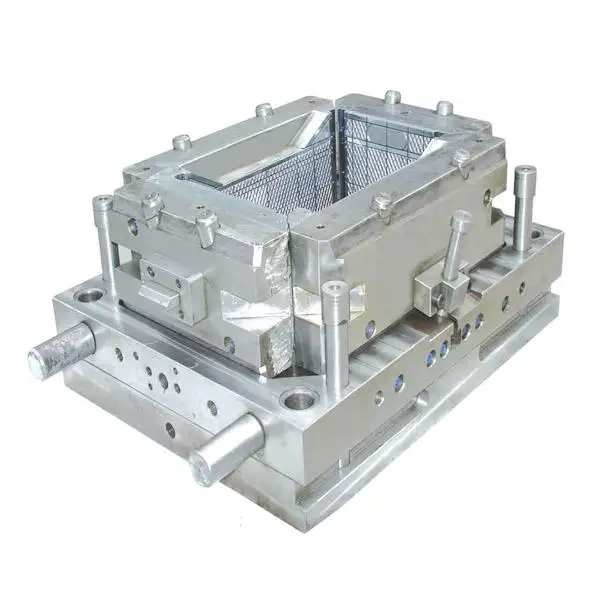
Custom aluminum injection molding with AIM plastic, with design and engineering support, OEM, ODM, injection mold making, competitive price, shipment support
The term aluminum injection molding is widely used in the world of injection molding, but it is also one of the most misunderstood phrases in plastic injection molding.
Many people assume it refers to molding aluminum as a raw material. In reality, aluminum injection molding almost always means plastic injection molding using aluminum molds, not injecting aluminum itself.
This article explains what aluminum injection molding really is, how aluminum injection molds compare to steel injection molds, their benefits and limitations, and when aluminum tooling for injection molding is the right tooling option for your project.
[bg_collapse_level2 view=”link” color=”#e34507″ icon=”arrow” expand_text=”Read More” collapse_text=”Read Less” ]
Aluminum injection molding refers to:
Plastic injection molding that uses an aluminum injection mold (aluminum alloy tooling) instead of a traditional steel mold.
Key clarification:
❌ The injected material is not aluminum
✅ The injected material is plastic (ABS, PP, PA, PC, POM, etc.)
✅ The injection mold itself is made from aluminum alloy
In professional terms, it is more accurate to say:
Injection molding with aluminum tooling
Aluminum mold for plastic injection
Tooling for injection molding using aluminum
However, “aluminum injection molding” has become common industry shorthand across production tooling, prototyping, and product development.
Aluminum is a metal with a melting point of approximately 660°C, which is far beyond the operating range of a standard plastic injection molding machine.
Processes used to shape aluminum include:
Aluminum die casting
CNC machining
Forging
Metal injection molding (MIM, using metal powder, not molten aluminum)
The injection molding process used for plastic parts cannot process molten aluminum, so aluminum injection molding never refers to aluminum as the injected material.
Aluminum injection molding molds are precision tools CNC-machined from aluminum alloys and mounted on standard injection molding machines.
They function exactly like steel molds:
Plastic is injected into the mold cavity
The plastic cools and solidifies
The mold opens and ejects the finished plastic part
The difference lies in mold material, not in injection mold design or machine operation.
Good machinability
Lower cost
Moderate durability
Often used for prototype aluminum molds, very low-volume production, and early-stage product development.
Higher-strength aluminum alloy
Better wear resistance
Improved tolerance retention
Common in low-volume aluminum molds and short production runs, requiring better mold life.
Mold-specific aluminum alloy
Excellent thermal conductivity of aluminum
Better hardness and surface finish capability
Widely used in professional aluminum mold manufacturing and rapid aluminum tooling.
Aluminum molds are chosen primarily for speed, flexibility, and cost efficiency—especially when compared to steel.
Aluminum is significantly easier to machine than hardened steel.
Benefits:
Faster CNC machining
Shorter aluminum tooling lead time
Quicker design iterations
A CNC-machined aluminum mold can often be delivered in weeks instead of months, helping teams bring products to market faster.
Compared to steel injection molds:
Lower material cost
Reduced machining time
Simpler aluminum mold base construction
This makes aluminum injection molding a cost-effective solution for:
Prototypes
Pilot production
Market validation
Startup projects
The thermal conductivity of aluminum is 3–5 times higher than that of steel.
Advantages:
Faster cooling
Shorter cycle times
More uniform temperature control in the mold cavity
For short production runs, aluminum molds can sometimes outperform steel molds in cycle speed.
Typical aluminum mold life ranges from:
5,000 to 50,000 shots (depending on plastic material, cavity geometry, and mold design)
This lifespan is ideal for:
Functional prototypes
Bridge tooling
Low-volume production
Custom plastic parts
Design changes are common during early production.
Compared to steel, aluminum allows:
Faster re-cutting
Easier repair and modification
Lower cost adjustments
This flexibility is a major advantage in product development, especially when tooling options are still being evaluated between aluminum and steel.
Despite its advantages, aluminum tooling is not suitable for every project. Understanding the disadvantages of aluminum is critical when choosing an aluminum solution.
Aluminum is softer than hardened steel, which directly affects aluminum mold durability and aluminum mold lifespan.
Consequences:
Faster wear during the machining process and production
Shorter service life compared to steel molds
Not suitable for millions of parts or long-term high-volume production runs
While aluminum injection molds offer excellent speed and cost savings, they are not designed to produce millions of parts. For high volumes or high-volume production, steel molds remain the better long-term investment.
Certain resins accelerate wear on aluminum tooling.
Materials that cause excessive abrasion include:
Glass-filled nylon
Carbon-fiber reinforced plastics
Mineral-filled resins
These materials significantly reduce aluminum mold lifespan and increase maintenance. Aluminum molds also struggle under extended runs with abrasive fillers, making steel the preferred choice for such applications.
Aluminum injection molds support a wide range of surface finishes, but there are limitations.
Compared to steel:
Aluminum is harder to polish to a mirror quality
Aluminum mold polishing requires more care
Deep textures, sharp corners, and complex cosmetic finishes are harder to maintain
While acceptable textures and finishes are possible, surface finishes compared to steel are generally less durable. High-gloss cosmetic parts often require steel molds for long-term consistency.
Due to aluminum’s low density, aluminum molds are more sensitive to:
High clamping force
Very high injection pressure
Large cavity geometry or thick-wall parts
Large molded parts, extreme tolerance requirements, or high-pressure molding may exceed aluminum’s structural limits, especially in extended production quantities.
| Feature | Aluminum Mold | Steel Mold |
|---|---|---|
| Tooling Cost | Low | High |
| Lead Time | Fast | Long |
| Mold Life | Low–Medium | High |
| Cooling Speed | Very Fast | Moderate |
| Design Changes | Easy | Difficult |
| High-Volume Production | ❌ Not Suitable | ✅ Suitable |
| Glass-Filled Materials | ❌ Not Recommended | ✅ Recommended |
Explanation
Thanks to superior thermal conductivity, aluminum molds cool much more quickly than steel molds, which helps reduce cooling time and shorten the overall injection molding cycle. This makes aluminum tooling ideal for prototyping, bridge tooling, and low-volume production.
Steel molds, while more expensive and slower to manufacture, offer exceptional durability and wear resistance, making them the preferred choice for high-volume production and abrasive materials such as glass-filled plastics.
Aluminum injection molding is widely used across industries where speed, flexibility, and reasonable cost matter.
Functional prototypes
Design validation parts
Fit and assembly testing
An aluminum mold for prototyping enables rapid prototyping using real plastic materials. Injection-molded prototypes deliver higher accuracy and performance than 3D printing, making them ideal for engineering validation.
Device housings
Diagnostic components
Disposable medical parts
Plastic injection molding with aluminum molds supports fast iteration, compliance testing, and controlled production quantities without excessive initial tool investment.
Startup consumer goods
Custom accessories
Limited-edition products
Lower upfront costs reduce financial risk while delivering professional molded parts suitable for market launch.
Clips and brackets
Enclosures
Small mechanical parts
Especially effective for customized industrial components and aluminum tooling for small batches.
Best-suited plastics include:
ABS
PP
PE
PC (unfilled)
POM
TPU (soft grades)
These materials balance flow, pressure, and wear, extending aluminum mold durability.
Materials to avoid:
Glass-filled nylons
Highly abrasive compounds
Selecting the right material is one of the most important factors to consider when using aluminum molds.
Keep walls uniform
Avoid thick mass sections to reduce sink marks
Uniform geometry supports faster heat dissipation and stable molding.
Minimum 1–2°
More draft reduces wear and improve release
A proper draft improves machinability and mold life.
Larger gates reduce injection pressure
Avoid high shear zones
Effective aluminum mold gate design lowers stress on the cavity and supports faster production.
Leverage aluminum’s superior thermal conductivity
Simplified aluminum mold temperature control layouts often work well
High-thermal-conductivity molds allow shorter cooling time and reduce overall cycle duration.
One of the most strategic uses of aluminum injection molding is bridge tooling aluminum mold applications.
Bridge tooling:
Bridges prototype and mass production
Supports early market entry
Generates revenue before steel molds are complete
Many manufacturers start with aluminum molds for rapid tooling and later transition to steel once volumes increase.
Aluminum injection mold cost is typically lower due to:
Lower initial tool investment
Shorter machining process
Much faster than steel mold production
These cost savings improve return on investment during the early stages.
However, the cost per part may increase over time due to:
Shorter mold life
Maintenance and aluminum mold repair
Replacement tooling for higher volumes
Choosing aluminum depends on production quantities, lifecycle planning, and overall ROI—not just tooling price.
Choose aluminum molds if:
You need faster production
Production volume is low to medium
Design changes are likely
Lower upfront costs are critical
Time-to-market matters
Avoid aluminum molds if:
Annual volumes are very high
Materials are abrasive
Surface finishes are extremely demanding
Hybrid aluminum-steel tooling
Improved aluminum alloys
Faster rapid tooling integration
Increased adoption in agile manufacturing
Aluminum tooling continues to evolve as product cycles shorten and flexibility becomes more valuable.
Aluminum injection molding is not about molding aluminum—it is about molding smarter.
By using aluminum molds, manufacturers benefit from:
Faster production
Lower upfront costs
Improved heat dissipation
Greater flexibility during development
For prototyping, low-volume production, and bridge tooling, aluminum injection molding sevice delivers exceptional value when the right factors are considered.
Understanding both the advantages of aluminum and its limitations ensures the correct tooling strategy—and avoids costly mistakes later.
[/bg_collapse_level2]