
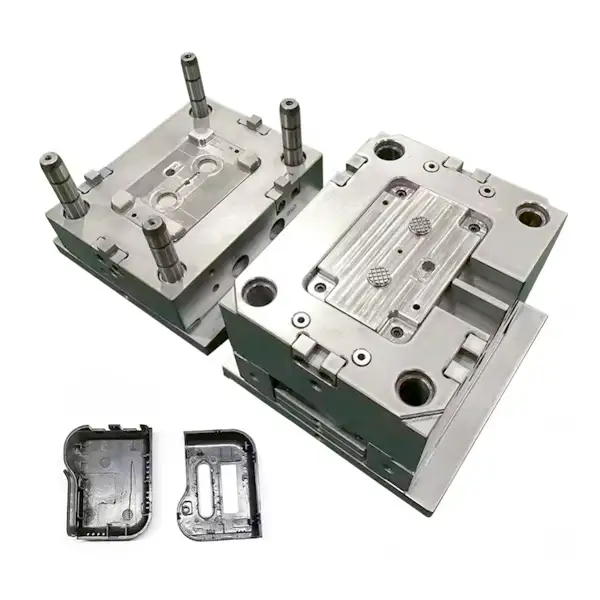
Custom Short Run Injection Molding with AIM plastic, with design and engineering support, OEM, ODM, injection mold making, competitive price, shipment support
Short run injection molding has become an essential manufacturing solution for companies that need high-quality plastic parts without committing to high-volume production. In today’s fast-moving product development environment, businesses must balance speed, lower cost, flexibility, and consistent quality.
Short-run injection molding provides an efficient way to produce low quantities and small batch plastic injection molded parts, helping companies move products to market faster while keeping tool costs under control.
As a form of low-volume injection molding, short-run injection molding bridges the gap between prototyping and low-volume production and traditional injection molding. It offers a practical alternative to 3D printed parts when production-grade strength, accuracy, and surface finish are required. This approach is especially suitable for short production runs, limited production molding, and early-stage commercialization.
[bg_collapse_level2 view=”link” color=”#e34507″ icon=”arrow” expand_text=”Read More” collapse_text=”Read Less” ]
This article explores what short-run injection molding is, how the injection molding process works, its key advantages, commonly used plastics and mold material options, typical applications, and how it compares to other manufacturing methods, such as 3D printed parts and traditional injection molding.
Short run injection molding refers to the production of small quantities of plastic components—typically from 50 to 10,000 units—using plastic injection molding technology. Also known as small run, short run injection, or short run plastic injection molding, this method focuses on low-volume production, fast turnaround, and reduced molding cost.
Unlike traditional injection molding, which relies on expensive hardened steel tooling for massive production quantities, short-run molding uses simplified injection mold designs and alternative mold material options. Common tools include aluminum molds, soft tooling injection molding, or pre-hardened steel mold inserts, all designed for shorter mold life but faster delivery.
Short-run injection molding is widely used for:
New product development and prototype injection molding
Market testing and pilot production runs
Bridge injection molding between prototype and mass production
Custom or niche plastic products
Engineering validation, functional testing, and medical device evaluation
The molding process for short-run injection molding closely follows the standard injection molding process, with differences mainly in mold design, tooling strategy, and scale of production.
The process begins with a 3D CAD model of the plastic part. Engineers conduct mold design optimization and Design for Manufacturability (DFM) analysis to ensure the part is suitable for running plastic injection molding on standard injection molding machines.
This stage focuses on:
Optimizing wall thickness for low-volume molding
Reducing undercuts to simplify the tool
Improving gate location and part ejection
Enhancing moldability and surface quality
Good DFM is critical in short-run injection molding because tooling budgets are tighter, prototype mold design changes are frequent, and fast iteration is required.
Instead of hardened steel tooling, short-run injection molding typically relies on rapid tooling solutions such as:
Aluminum injection molds
Pre-hardened steel mold tooling
Hybrid or short-life molds
An aluminum mold is especially popular for small-batch injection molding because it offers fast machining, excellent heat dissipation, and significantly lower tooling costs. These tools can often be produced in days or weeks, enabling fast turnaround molding and on-demand manufacturing.
During production, molten plastic is injected into the injection mold cavity using standard injection molding machines. The part cools, solidifies, and is ejected, producing consistent, plastic injection-molded parts suitable for real-world use.
Because volumes are low, manufacturers can closely monitor parameters such as temperature, pressure, and cycle time, ensuring high-quality parts across short production runs and small batch orders.
After molding, parts may undergo:
Trimming and deflashing
Surface finishing or texture adjustment
Assembly of multiple plastic parts
Dimensional inspection and functional testing
Short-run molding often includes hands-on quality checks, making it ideal for medical device, industrial, and custom plastic molding applications where precision matters.
The benefits of short-run injection molding make it one of the most flexible injection molding solutions for low-volume manufacturing.
One of the most significant advantages is reduced upfront investment. By using low-cost mold tooling, soft tooling injection molding, or aluminum injection molds, manufacturers can drastically reduce costs compared to traditional steel tooling.
This makes short run injection molding ideal for:
Startups and SMEs
Prototype validation
Custom and niche plastic injection molding service projects
With rapid injection molding and quick-change tooling, tooling and production can often be completed within 1–3 weeks. This enables faster products to market, especially during early commercialization or market testing.
Unlike 3D printed parts or silicone casting, short-run injection molding delivers true high-quality plastic parts with:
Consistent mechanical properties
Tight tolerances
Excellent surface finish
Reliable performance in end-use applications
Because molds are simpler and easier to modify, engineers can quickly update mold design, adjust gating, refine dimensions, or improve aesthetics without high cost or delay.
Bridge injection molding allows companies to start selling or testing products while waiting for hardened steel tooling. This keeps revenue flowing during tooling transitions and supports scalable growth.
Short run injection molding supports a wide range of thermoplastics used in plastic injection molding, depending on strength, temperature resistance, and application needs.
ABS – Impact resistance and easy processing
Polypropylene (PP) – Lightweight and chemically resistant
Polyethylene (HDPE / LDPE) – Flexibility and durability
Polystyrene (PS) – Cost-effective for low quantities
Polycarbonate (PC) – High strength and transparency
Nylon (PA6 / PA66) – Wear resistance and mechanical strength
POM (Acetal) – Dimensional stability and low friction
PET / PBT – Electrical insulation and chemical resistance
PEEK
PPS
PEI (Ultem)
These materials can be molded in short-run injection molding, though tooling complexity and molding cost are higher. They are often used for specialized medical devices, aerospace, or industrial applications requiring high-quality parts in low-volume production.
Choosing the right mold type is critical for balancing cost, durability, output, and overall manufacturing agility. In low-volume injection molding, tooling options directly affect lead time, per-part cost, and the ability to respond to design changes during product development and NPI stages.
Aluminum molds are the most common tooling option for short run injection molding and are widely used to manufacture injection-molded parts in low-volume production environments.
Advantages:
Lower upfront investment and reduced tooling cost
Fast machining for short lead time manufacturing
Excellent thermal conductivity for faster mold cooling
Supports fast turnaround and production run flexibility
These benefits make aluminum molds a cost-effective injection molding solution for small companies, startups, and rapid prototypes.
Limitations:
Shorter mold life compared to tool steel
Not ideal for abrasive or glass-filled plastic molding
Less suitable for long-term high-volume production
Typical lifespan: 1,000–10,000 shots, making them ideal for a limited number of parts, small batch, and production of small parts in small quantities.
Pre-hardened steel molds made from tool steel offer a longer service life than aluminum while remaining suitable for short-run injection molding processes and volume molding below mass-production levels.
Advantages:
Improved wear resistance
Compatible with glass-filled plastics
Higher shot count and better dimensional stability
Supports tighter tolerances for high-precision plastic parts
Soft steel molds are often selected when injection molding requires stronger tooling but still needs a lower upfront cost compared to hardened steel tooling.
Typical lifespan: 10,000–50,000 shots, making them a solid choice for manufacturers planning scalable molding projects.
Some manufacturers use modular mold bases with interchangeable inserts, allowing different mold configurations within the same base.
This approach allows:
Faster design changes without rebuilding the entire mold
Lower long-term tooling investment across product families
Multiple part variations with consistent part geometry
This tooling strategy is especially useful for product development molding, pilot production molding, and applications including short-run manufacturing, where the final design may evolve.
Short-run injection molding becomes increasingly valuable as product life cycles shorten and production needs become more dynamic.
Engineers rely on short-run injection molding to produce rapid prototypes and functional injection molded parts that match real production materials.
Unlike 3D printing, thermoplastic injection molding uses real plastic pellets melted into molten plastic, injected as plastic into a mold, and cooled until the finished part is ejected. This ensures accurate testing before mass manufacture.
Short-run molding supports automotive prototype parts and low-volume vehicle programs.
Applications include:
Interior trim components
Sensor housings
Clips and brackets
EV component enclosures
Injection molding allows OEMs to validate tooling, material choice, and assembly before committing to high-volume production, helping bring new products to the market with lower risk.
Medical manufacturers use low-volume injection molding to provide reliable results for medical device prototyping and regulatory validation.
Applications include:
Device housings
Surgical tools
Diagnostic components
Short-run injection molding provides high-quality parts quickly, allowing products to market faster while maintaining strict quality standards.
Common molded parts include:
Enclosures
Buttons and connectors
Wearable device components
Short run injection molding provides the speed and flexible production volumes required for frequent design updates and fast consumer product cycles.
Low-volume industrial machinery often requires custom-molded parts where high-volume tooling is not justified. Short run molding supports durable finished parts at a reasonable per-part cost.
| Feature | Short Run Injection Molding | Traditional Injection Molding |
|---|---|---|
| Production Volume | Low–Medium | High |
| Tooling Cost | Low | High |
| Lead Time | Short | Long |
| Design Flexibility | High | Low |
| Part Cost (per unit) | Higher | Lower |
| Ideal Use | Prototypes, bridge production | Mass production |
Traditional injection molding excels in high-volume production, while short run molding delivers manufacturing agility and scalable manufacturing solutions for evolving markets.
While 3D printing excels in concept models, it cannot fully replace injection molding when performance matters.
Short Run Injection Molding Advantages:
Superior material properties
Better surface finish
Tight tolerance injection molding
Consistent quality across molded parts
3D Printing Advantages:
No tooling required
Extreme design freedom
Fast for single or visual-only parts
For finished parts used in real applications, short run injection molding process remains the superior manufacturing process.
To maximize efficiency and control molding cost:
Maintain uniform wall thickness
Avoid deep undercuts
Use standard draft angles
Minimize complex surface textures
Select materials compatible with aluminum tooling
Early collaboration reduces redesign cycles and ensures high-quality injection-molded parts.
Total project cost is influenced by:
Tooling complexity
Thermoplastic material selection
Part size and geometry
Production volume
Secondary operations
Although the per-part cost is higher than mass production, short run injection molding provides a significantly lower total investment for low-volume production.
Short-run injection molding is ideal when:
Annual volume is below 10,000 units
Product design is still evolving
Fast lead time is critical
You need high-quality parts quickly
Full-scale tooling is not yet justified
It is a proven choice for manufacturers launching new products to the market efficiently.
Short-run injection molding is a powerful and cost-effective injection molding solution for companies seeking speed, flexibility, and high-quality injection molded parts at low volumes. By enabling reduced tooling cost, short lead time manufacturing, and production run flexibility, it supports faster launches and lower financial risk.
Whether used for bridge production, pilot production molding, or niche market products, short-run injection molding delivers reliable results across industries.
As customization increases and time-to-market pressure grows, short-run injection molding becomes an essential strategy for modern plastic manufacture, and low-volume injection molding provides long-term competitive advantage.
[/bg_collapse_level2]


