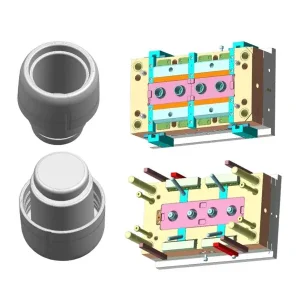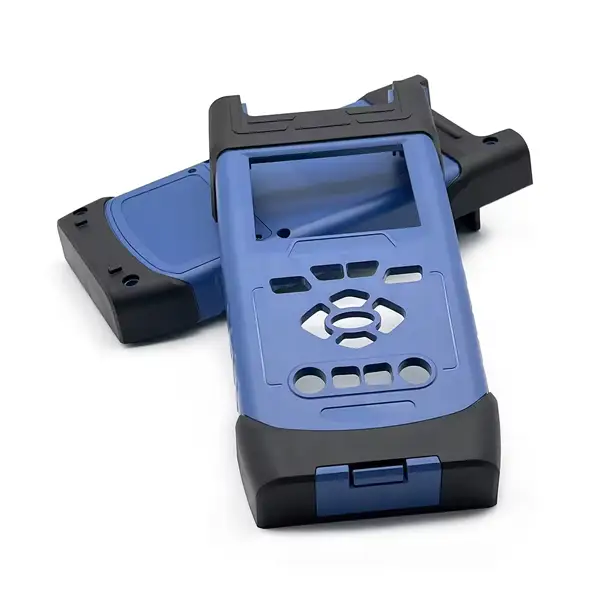
Custom 2 part injection moulding with AIM plastic, with design and engineering support, OEM, ODM, injection mold making, competitive price, shipment support
As product designs become more complex and functional integration becomes a competitive necessity, manufacturers are increasingly turning to 2-part injection moulding as an advanced manufacturing process to produce high-performance plastic components in a single, efficient machine cycle.
Compared to traditional injection molding, this approach enables the production of multi-material parts in a single automated operation using a single machine, rather than multiple assembly steps.
Also known as two-shot molding, two-shot injection molding, 2-shot injection molding, or two-shot plastic injection molding, this specialized injection molding process allows two different materials or colors—often two distinct materials or two plastics—to be injected into a mold sequentially, forming a fully integrated component without secondary bonding, gluing, or mechanical fastening.
[bg_collapse_level2 view=”link” color=”#e34507″ icon=”arrow” expand_text=”Read More” collapse_text=”Read Less” ]
From consumer electronics and automotive interiors to medical devices and industrial components, two-shot injection molded parts offer improved durability, enhanced ergonomics, and superior aesthetics. By combining molding and overmolding within the same tool, manufacturers can reduce mold costs, simplify product design, and achieve reliable high-volume production.
This guide provides a comprehensive overview of 2 part injection moulding, covering how the two-shot injection molding process works, materials or colors selection, mold and tooling design, applications, advantages and disadvantages of two-shot molding, and how to choose the right partner for professional injection molding services and advanced molding solutions.
2 part injection moulding is a form of multi-component injection molding in which two or more different materials are injected sequentially into a single mold to create one integrated plastic component. Unlike standard injection molding, which typically produces single-material parts, this method enables multi-material injection molding within the same injection molding machine.
In a typical shot injection molding sequence, the process involves:
The first material being injected into the mold to form the base geometry
The part remaining inside the same tool or being repositioned within the mold
A second injection applying the second shot material over or around the first shot
Both materials bond to create a unified part using chemical adhesion, thermal fusion, or mechanical interlocking
This two-shot molding process results in multi-material parts produced in one continuous manufacturing process, eliminating post-processing and reducing reliance on traditional injection molding assembly workflows.
Depending on the region, industry, or injection molding services provider, this technology may also be referred to as:
Two-shot injection moulding
Double injection moulding
Dual-shot molding process
Multi-shot injection molding
2K injection molding
Bi-material molding
Two-component injection molding
Although terminology varies, all describe the same core concept: combining two materials, two or more materials, or multiple materials in a single shot molding operation using a dedicated two-shot injection molding machine.
The fundamental difference between traditional injection molding and two-shot injection molding lies in the injection units, tooling configuration, and the ability of the injection molding machine to manage a controlled two-shot injection molding process.
Instead of a standard injection molding machine with one injection barrel, two-shot systems typically use dual injection units or a specialized machine capable of sequential shots within the same machine cycle.
Step 1: First Shot Injection
The first plastic material is injected into a mold cavity during the initial stage of the injection molding process. This first shot usually forms the structural backbone of the part and may require higher rigidity, dimensional stability, or heat resistance.
Step 2: Mold Rotation or Transfer
After partial cooling, the mold rotates via rotating platen injection molding, shifts through an indexing plate molding system, or uses a mold transfer system to reposition the part for the next stage of the two-shot molding process.
Step 3: Second Shot Injection
The second injection introduces a different material or color from the first shot. This second shot often performs functional or aesthetic roles such as:
Soft-touch grip zones
Sealing features
Electrical insulation
Vibration damping
Color differentiation
This stage closely resembles overmolding, but unlike vs overmolding processes, performed separately, two-shot molding integrates both steps into one continuous molding process.
Step 4: Cooling and Ejection
Once both materials are fully formed and bonded, the two-shot injection molded part cools and is ejected as a finished component—no secondary overmolding process or assembly required.
Different configurations are used depending on part design, production volume, and injection molding machine capabilities.
Rotary Platen Two-Shot Molding
This method relies on rotating platen injection molding, where the mold rotates between shots. It offers high precision, excellent repeatability, and is ideal for complex multi-material parts requiring tight tolerances.
Core-Back Two-Shot Molding
In this configuration, the mold core moves to create space for the second shot. It is often used for simpler geometries and can reduce tooling complexity while maintaining efficient shot molding performance.
Transfer Two-Shot Molding
Here, the part is mechanically transferred between cavities. This solution is applied when rotation is not feasible or when integrating with co-injection molding technology or specialized sequential injection molding setups.
Successful multi-material injection molding depends heavily on material compatibility. The selected plastics must bond effectively during the two-shot molding process, whether through chemical adhesion, thermal fusion, or mechanical locking features.
Rigid + Soft Materials
ABS + TPE
PC + TPU
Nylon + TPE
These combinations are commonly used in grips, seals, and ergonomic interfaces where molding and overmolding performance is critical.
Rigid + Rigid Materials
ABS + PC
PC + PBT
Nylon + Nylon (different grades or colors)
Used in applications requiring structural integrity with localized functional zones.
Same Material, Different Colors
ABS + ABS
PC + PC
Ideal for branding, indicators, and visual differentiation using materials or colors rather than additional components.
The mold is the most critical factor in successful two-shot injection molding and represents a significant portion of overall mold costs.
Two-shot tooling typically requires a multi-cavity two-shot mold, precise alignment systems, and advanced thermal control to support different materials within one manufacturing process.
Key design considerations include cavity positioning, gating balance, venting strategy, and synchronization of injection units within the same injection molding machine.
Effective product design for two-shot injection molding vs traditional injection molding requires early collaboration between design engineers and tooling specialists.
Important guidelines include managing shrinkage differences between two or more materials, designing sufficient overlap for bonding, avoiding sharp transitions, and planning draft angles for both shots.
Well-optimized part design ensures consistent bonding, stable machine cycles, and reliable output across high-volume production, making two-shot molding a powerful alternative in injection molding vs overmolding decision-making.
2 part injection moulding, also known as 2K molding or dual-shot molding, offers significant advantages over traditional plastic injection molding, especially for applications requiring multi-material, high-precision, and integrated performance. Unlike processes that rely on insert molding or post-assembly, this process, which combines two different materials, produces a fully integrated single part in one controlled molding cycle.
Integrated Functionality
The molding process allows for the creation of a multi-resin molded part that combines structural strength, sealing, and aesthetic features into a single injection molded part. By combining two materials or two different materials or colors, manufacturers can integrate multiple functions into one design without secondary operations.
Stronger Bonding
During material injection, both the first injection and the second shot occur inside the same mold to form a solid part. This enables strong, rigid, and soft plastic bonding through chemical bonding between plastics, optimized material adhesion compatibility, or intentional mechanical interlock design, eliminating adhesives, screws, or fasteners.
Improved Product Quality
Because injection molding allows both materials to be injected and bonded in a single automated cycle, fewer assembly steps are required. This results in tighter tolerances, better tolerance control in multi-shot molding, and more consistent quality across each molded part, especially in demanding injection molding applications.
Lower Long-Term Cost
Although tooling investment is higher due to advanced mold design, second mold cavities, and independent injection units, overall cost efficiency improves over time. Reduced labor, minimized scrap, and shorter downstream operations offset initial tooling expenses when compared to similar traditional injection molding plus assembly.
Enhanced Aesthetics
Two-shot molding offers clean transitions between two distinct materials or colors, making it ideal for multi-color plastic parts, branding elements, and visible consumer components. The ability to precisely control gate design for two-shot molding and parting line control in two-shot molds further enhances surface quality.
Higher Production Efficiency
With a fully automated plastic injection process using an advanced injection molding machine, cycle times remain stable and predictable. Two-shot molding offers consistent output, repeatable injection speeds and pressures, and high efficiency for automotive, electronics, and consumer product manufacturing.
While powerful, two-shot injection molding is typically not suitable for every molding need or product lifecycle stage.
Higher initial tooling cost due to complex two-shot mold design considerations
Longer mold development time, including mold flow analysis for two-shot parts
More complex machine setup with independent injection units
Material compatibility constraints, as the process must be chemically or mechanically compatible
Less flexibility for design changes once tooling is finalized
Two-shot molding is ultimately best suited for medium- to high-volume production where molding two materials into one integrated part justifies the upfront investment.
Two-shot molding is widely used across multiple industries where multi-material plastic injection molding delivers functional and commercial advantages.
Buttons and keypads
Soft-touch device housings
Wearable components
Connector housings
These applications often require thermoplastic elastomer overmolding combined with rigid substrates to improve ergonomics and durability.
Interior trim components
Control knobs and switches
Seals and gaskets
Sensor housings
In automotive manufacturing, two-shot molding enables waterproof sealing components, vibration damping, and long-term reliability under thermal and mechanical stress.
Grips and handles
Sealed enclosures
Diagnostic components
Ergonomic instrument parts
Medical parts benefit from ABS and TPE two-shot molding, nylon two-shot injection molding, and precise shrinkage control in dual-shot molding.
Power tool housings
Control panels
Protective covers
Electrical connectors
These applications rely on durable molded parts with controlled interfaces between two plastic resins.
Toothbrush handles
Kitchen tools
Sporting equipment
Personal care products
Many of these products use ergonomic grip molding and soft-touch plastic components to improve user experience.
Although related, injection molding vs overmolding depends on production volume, part complexity, and automation requirements.
Both materials are molded in one automated cycle
Uses a single mold and one machine
Mold either rotates or transfers within the same tool
Higher precision and repeatability for complex functional plastic parts
The second material is molded over a pre-made part
Often involves manual or semi-automatic loading
Lower tooling cost but higher labor cost
Bonding quality depends on the overmolding material and handling
For high-volume and precision parts, two-shot injection molding offers superior consistency and long-term cost efficiency. Choosing between injection molding and overmolding depends on product complexity and production strategy.
Quality assurance is critical because injection molding requires precise control over multiple stages of the part.
Dimensional inspection (CMM)
Bond strength testing
Visual inspection of the material interface
Functional testing
Environmental and aging tests
Advanced manufacturers monitor material injection, molding cycle, and cavity conditions in real time to ensure consistent output.
While typically used for mass production, two-shot molding also supports early-stage design and prototyping, pilot runs, and product validation.
Using aluminum tooling or simplified initial mold designs helps reduce cost and allows engineers to evaluate how materials interact when molded around each other.
Not all injection molding service providers are equipped for two-shot production.
Proven experience, including two-shot and multi-material molding
In-house mold design and fabrication capabilities
Deep understanding of material adhesion compatibility
Advanced machines capable of precise material injection
Strong quality management systems
Engineering, DFM, and injection molding quote support
A capable partner helps optimize the part to be molded, reduce development risk, and ensure long-term production success.
Understanding the cost structure helps with planning and budgeting.
Mold complexity and size
Number of cavities
Material selection
Machine tonnage requirements
Production volume
Cycle time
Although tooling costs are higher, the total cost per injection-molded unit often decreases over the full product lifecycle.
The demand for integrated, high-performance multi-material plastic parts continues to grow.
Miniaturization of two-shot components
Increased use of engineering plastics
Advanced multi-material functional integration
Automation and smart molding systems
Sustainable and recyclable material combinations
Including two-shot and hybrid processes, this technology is becoming central to advanced plastic injection molding strategies.
2 part injection moulding is a powerful manufacturing process that enables the production of high-quality, multi-material plastic injection components with superior performance, durability, and aesthetics.
By eliminating secondary assembly, improving bonding strength, and enabling molding two materials into one cohesive structure, two-shot injection molding delivers clear advantages across automotive, electronics, medical, and consumer product industries.
When executed with proper mold design, compatible materials, and an experienced manufacturing partner, two-shot molding delivers consistent quality, lower long-term costs, and scalable production—making it an essential solution for modern product development.
[/bg_collapse_level2]