

Injection molding is one of the most versatile manufacturing processes for producing high-quality plastic parts. However, choosing the right material is critical for performance, cost, and application.
Two major categories dominate injection molding materials: thermoplastics and thermosets. Understanding their differences, advantages, limitations, and applications is essential for engineers, product designers, and manufacturers.
This guide explains thermoplastics vs thermosets in injection molding, covering material properties, process differences, design considerations, applications, and future trends.
What Are Thermoplastics?
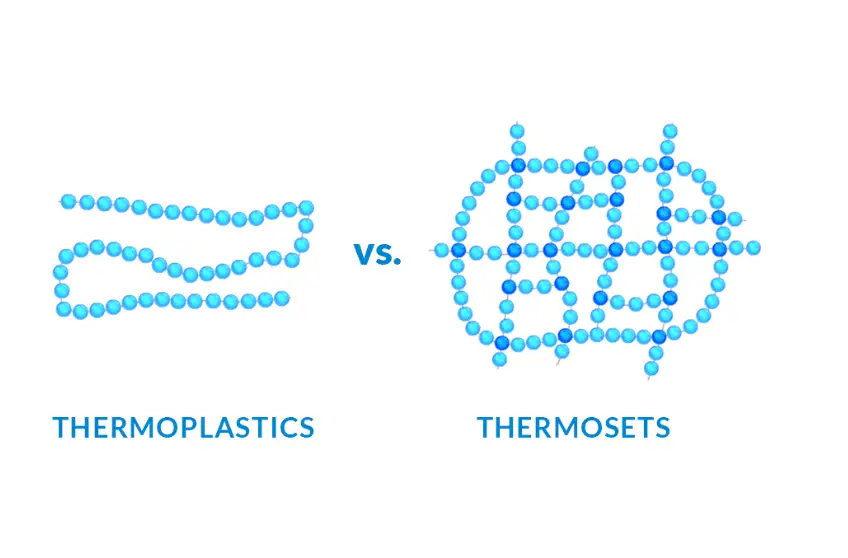
Thermoplastics are polymers that soften when heated and harden when cooled, a process that is reversible and repeatable. This property allows thermoplastics to be re-melted and re-shaped, making them ideal for high-volume, cost-efficient production.
Common Thermoplastic Materials
- ABS (Acrylonitrile Butadiene Styrene) – Strong, impact-resistant, and versatile
- Polycarbonate (PC) – Transparent, tough, and heat-resistant
- Polypropylene (PP) – Lightweight, chemical-resistant, and flexible
- Nylon (PA) – Durable, wear-resistant, and high-strength
- Polyethylene (PE) – Flexible, low-cost, and chemically resistant
- PBT & PET – High-performance engineering plastics with dimensional stability
Key Properties of Thermoplastics
- Re-moldable and recyclable
- Can be processed using standard injection molding machines
- Good impact resistance and toughness
- Wide range of flexibility, hardness, and chemical resistance
- Can be colored, reinforced, or blended with additives for specialized applications
What Are Thermosets?
Thermosets, also called thermosetting plastics, are polymers that irreversibly cure during the molding process. Once set, they cannot be melted or reshaped. Thermosets form rigid, heat-resistant, and chemically stable parts, suitable for high-performance or electrically insulating applications.
Common Thermoset Materials
- Epoxy Resins – High strength and chemical resistance
- Phenolic Resins – Heat and fire-resistant, good for electrical components
- Urea-Formaldehyde – Durable, rigid, and dimensionally stable
- Melamine – Hard, scratch-resistant, and heat-resistant
- Polyurethane (Thermoset Grade) – Flexible or rigid, depending on formulation
Key Properties of Thermosets
- Permanent chemical crosslinking provides high heat resistance
- Excellent dimensional stability under stress and temperature
- Superior electrical insulation properties
- Resistant to solvents, corrosion, and creep
- Cannot be remelted or recycled through conventional melting
Thermoplastics vs Thermosets: Process Differences
While both are used in injection molding, the processing methods differ significantly.
| Feature | Thermoplastics | Thermosets |
|---|---|---|
| State Before Molding | Solid pellets | Resin or pre-polymer compound |
| Heating Behavior | Softens when heated, hardens on cooling (reversible) | Cures chemically during molding (irreversible) |
| Molding Machines | Standard injection molding machines | Specialized thermoset injection molding machines |
| Cycle Time | Fast, can be seconds to minutes | Longer, depending on curing (minutes) |
| Recyclability | Re-moldable and recyclable | Not re-moldable; limited recyclability |
| Shrinkage | Moderate, predictable | Low, very stable after curing |
| Mechanical Properties | Good toughness, variable stiffness | High rigidity, heat, and chemical resistant |
Injection Molding Considerations for Thermoplastics
Thermoplastics are widely used due to their ease of processing and versatility.
Process Parameters
- Melt temperature: Typically 180–300°C, depending on polymer
- Injection pressure: Moderate to high, depending on viscosity
- Cooling time: Shorter cycles due to the re-meltable nature
- Mold design: Requires uniform wall thickness, proper draft angles, and venting to prevent defects
Advantages
- High-volume production capability
- Ability to produce complex geometries
- Recyclable and flexible for coloring, additives, or reinforcement
- Can be used for thin-wall, micro-molded, or high-precision parts
Limitations
- Lower heat resistance than thermosets
- Potential for creep under long-term stress
- Less chemically resistant in some aggressive environments
Injection Molding Considerations for Thermosets
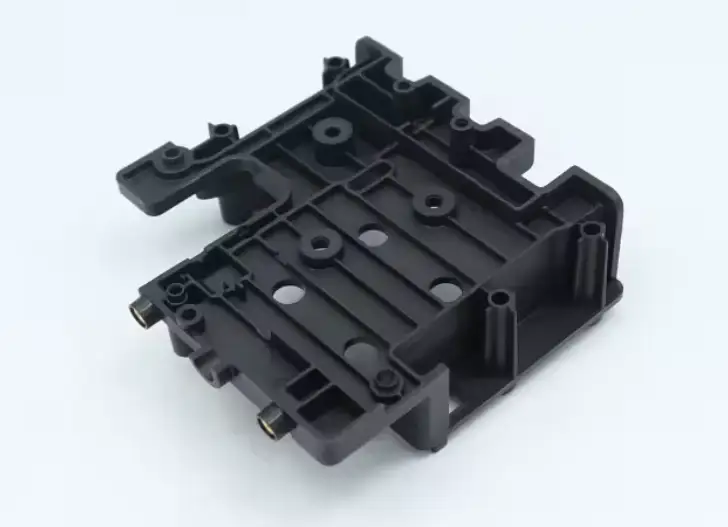
Thermosets require specialized processing due to curing chemistry.
Process Parameters
- Preheating: Resin may be preheated before injection
- Injection pressure: Typically lower than that of thermoplastics
- Curing: Chemical crosslinking occurs in the mold; cycle times are longer
- Mold design: Must account for shrinkage during curing; robust tooling needed
Advantages
- Excellent heat, chemical, and electrical resistance
- High-dimensional stability and rigidity
- Ideal for electrical insulators, high-temperature automotive parts, and structural components
Limitations
- Longer cycle times increase production cost
- Not recyclable through conventional melting
- Less flexibility for post-processing
Design Considerations: Thermoplastics vs Thermosets
Wall Thickness and Shrinkage
- Thermoplastics: moderate shrinkage; uniform wall thickness critical
- Thermosets: low shrinkage; can produce thin, high-precision parts with minimal warpage
Geometries and Complexity
- Thermoplastics allow highly intricate shapes and thin walls
- Thermosets excel at structurally rigid parts, but may require simpler mold design
Assembly and Inserts
- Thermoplastics: Can integrate overmolding or insert molding
- Thermosets: Limited to metal inserts pre-placed; high heat stability prevents deformation
Surface Finish
- Thermoplastics: Smooth, glossy surfaces; can be post-processed
- Thermosets: Matte or textured finish; resistant to wear and heat
Applications of Thermoplastics
Thermoplastics are chosen for applications where versatility, durability, and cost-efficiency are key.
- Consumer Electronics: Smartphone cases, laptops, remote controls
- Automotive: Dashboards, interior trims, connectors
- Medical Devices: Syringes, diagnostic housings, tubing connectors
- Household Appliances: Vacuum cleaners, coffee makers, refrigerator components
- Industrial Parts: Housings, gears, and protective casings
Applications of Thermosets
Thermosets excel where rigidity, heat resistance, or electrical insulation are critical.
- Electrical and Electronics: Circuit boards, connectors, switches
- Automotive: Brake components, engine mounts, high-temperature housings
- Aerospace: Heat-resistant, lightweight structural components
- Industrial Equipment: Tool handles, wear-resistant components, chemical-resistant parts
Cost Considerations
- Thermoplastics: Lower material and cycle costs; suitable for high-volume production
- Thermosets: Higher material cost and longer cycle times; justified for specialized applications
Decision Tip: Choose thermoplastics for volume, complexity, and flexibility, and thermosets for heat, chemical resistance, and high structural integrity.
Sustainability Considerations
- Thermoplastics: Recyclable, can be reused or reprocessed
- Thermosets: Limited recyclability; often downcycled or incinerated for energy recovery
Increasing focus on bio-based thermoplastics and sustainable resins is shaping the industry.
Future Trends
- Advanced thermoplastics: High-performance polymers for automotive, medical, and aerospace
- Hybrid injection molding: Combining thermoplastics and thermosets for custom material properties
- Micro injection molding: Precision parts for medical and electronics
- Smart manufacturing: IoT-enabled injection molding machines for process monitoring and optimization
- Sustainable materials: Biodegradable or recycled polymers are gaining traction
Choosing the Right Material for Your Project
When deciding between thermoplastics and thermosets, consider:
- Mechanical requirements: Toughness vs rigidity
- Thermal performance: Operating temperature and heat resistance
- Chemical exposure: Resistance to solvents, oils, and acids
- Volume: High-volume runs favor thermoplastics
- Cost: Thermosets incur higher production costs
- Post-processing: Need for secondary operations or overmolding
Conclusion
Thermoplastics and thermosets each offer unique advantages for injection molding:
- Thermoplastics: High-volume production, versatile designs, recyclability, and cost-effectiveness
- Thermosets: High rigidity, heat resistance, chemical stability, and excellent electrical insulation
Choosing the right material depends on application requirements, manufacturing process capabilities, and cost considerations. By understanding the differences between thermoplastics and thermosets in injection molding, manufacturers can produce high-quality, durable, and efficient plastic components that meet both functional and regulatory requirements.
Whether designing for consumer products, automotive parts, medical devices, or industrial equipment, a thorough understanding of these materials ensures better product performance, reliability, and long-term success in injection molding production.