

ABS (Acrylonitrile Butadiene Styrene) is one of the most widely used thermoplastic polymers in plastic injection molding, valued for its strength, impact resistance, and versatility. ABS plastic injection molding is used in industries ranging from consumer electronics and automotive to medical devices and industrial ABS plastic components.
Understanding the properties of ABS, the injection molding process, and injection molding design is crucial for designers, engineers, and manufacturers seeking high-performance plastic parts and ABS molded plastic parts.
This guide to ABS covers ABS plastic injection molding, including material properties, processing techniques, design considerations, ABS injection molding services, applications, and quality control, providing a complete resource for professionals in the field.
What Is ABS Plastic?
ABS is a thermoplastic polymer made by polymerizing acrylonitrile butadiene styrene. Each component contributes unique material properties:
- Acrylonitrile: Provides chemical resistance, heat stability, and hardness for durable ABS plastic products.
- Butadiene: Improves impact resistance and toughness, making ABS parts suitable for high-impact ABS molding.
- Styrene: Offers rigidity, a glossy finish, and ease of processing during plastic injection molding.
This combination results in a thermoplastic with low melting characteristics and a moderate melting point, suitable for high-precision ABS injection molded parts and complex parts with varying wall thickness. ABS is a versatile material, lightweight, durable, and easy to inject, making it ideal for precision ABS injection molding and thin-wall ABS molding applications.
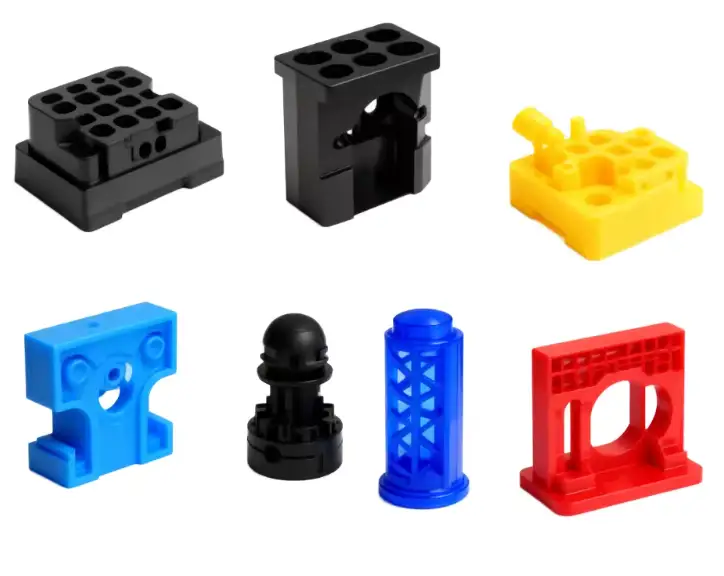
ABS Plastic Injection Molding Process Explained
ABS plastic injection molding follows standard thermoplastic injection molding principles, with attention to the material properties of ABS and the viscosity of ABS.
1. Material Preparation
ABS pellets are dried to remove moisture, preventing voids or defects in injection-molded parts. Additives such as UV stabilizers, colorants, or flame retardants may be added. Proper preparation ensures consistent melt flow, uniform injection speed, and injection pressure during the injection molding process, resulting in high-quality plastic components.
2. Injection
ABS pellets are melted in an injection mold to reach a molten state suitable for plastic injection molding. Controlling temperature is critical to maintain dimensional stability and proper flow. The ABS resin is then injected into the mold at precise injection speed and injection pressure, ensuring complete cavity filling for ABS injection molded components.
3. Mold Filling
Molten ABS plastic flows into the mold, conforming to the cavity shape. Correct injection molding design ensures complex parts and varying wall thickness are filled properly. Multi-cavity molds may be used for ABS plastic parts production, increasing efficiency while maintaining dimensional stability in all injection-molded ABS components.
4. Cooling and Solidification
After injection, ABS injection molded parts cool in the mold, solidifying into the desired shape. Temperature control in the mold and clamp pressure help maintain dimensional stability and reduce warping. Proper mold design minimizes flash, producing high-quality ABS plastic products with smooth surfaces suitable for post-processing.
5. Part Ejection
Once cooled, ABS molded plastic parts are ejected from the injection mold. Automation or robotic handling may be used for high-volume production in custom ABS injection molding. Parts are then inspected for dimensional accuracy, surface finish, and mechanical properties, ensuring reliable ABS plastic manufacturing.
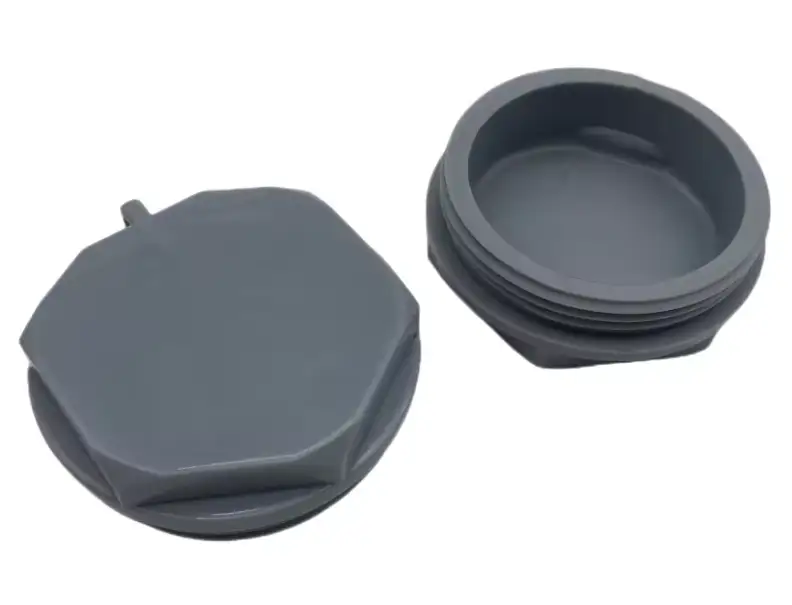
Advantages of ABS Plastic Injection Molding
ABS injection molding provides numerous benefits:
- High impact resistance: Suitable for durable products like industrial ABS plastic components, automotive ABS injection molding, and consumer electronics ABS molding.
- Design flexibility: Can accommodate complex parts and varying wall thickness.
- Surface finish: Produces glossy or textured surfaces for ABS housing injection molding.
- High-dimensional stability: Maintains tight tolerances across precision ABS injection molding runs.
- Ease of processing: Moderate melting point and low melting temperature reduce cycle time and energy usage.
- Cost-effective: Efficient plastic injection molding cycles and low material cost make ABS parts affordable.
- Custom ABS injection molding: Enables custom plastic parts and ABS plastic products tailored to client requirements.
Applications of ABS Plastic Injection Molding
ABS injection-molded parts are used in a wide range of industries. Applications include:
Consumer Electronics
- Housings for smartphones, tablets, and laptops
- Remote control casings
- Keyboards and peripherals
Consumer electronics ABS molding ensures durable, lightweight, and visually appealing plastic components.
Automotive Components
- Interior panels, dashboards, and trims
- Air vents, connectors, and switch housings
Automotive ABS injection molding offers dimensional stability, high-impact ABS molding, and excellent surface finish for vehicle interiors.
Household Appliances
- Coffee machine and vacuum cleaner housings
- Refrigerator parts
ABS plastic products allow ergonomic design and durable construction in daily-use appliances.
Industrial Equipment
- Protective casings for tools and machinery
- Control panels and enclosures
Industrial ABS plastic components require ABS plastic manufacturing processes that ensure dimensional stability and high performance.
Toys and Sports Equipment
- Durable, lightweight toy parts
- Sporting goods handles and components
ABS’s toughness and moldability make it ideal for high-impact ABS molding and plastic components in high-volume production.
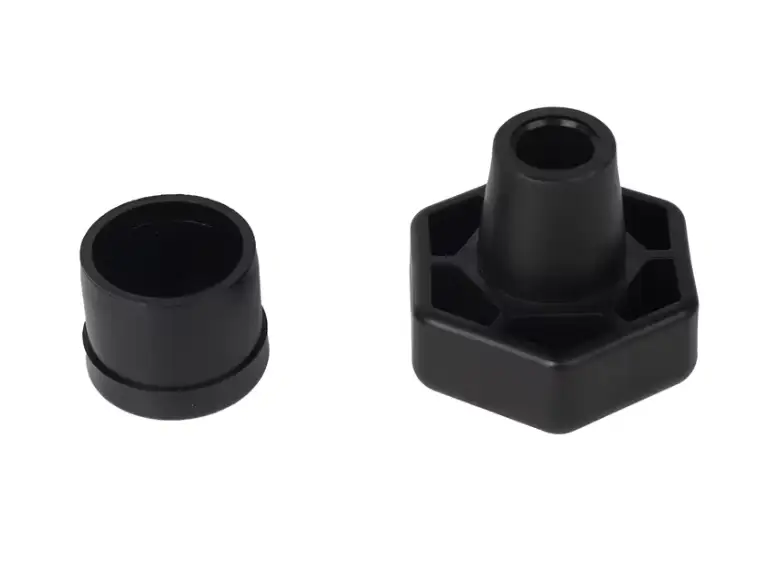
Design Considerations for ABS Injection Molding
Successful ABS plastic injection molding requires careful design for manufacturability (DFM), taking into account the ABS material properties, molding, and ABS molding design guidelines to produce high-quality injection-molded parts.
Wall Thickness
Maintain uniform wall thickness to prevent warping and shrinkage in molten ABS plastic. Thicker sections may require mold temperature adjustments or cooling channels to avoid sink marks. ABS plastic molding process benefits from consistent temperature control to ensure excellent dimensional stability and minimize ABS injection molding defects.
Draft Angles
Add draft angles (typically 1–2°) for easier ejection from the injection molding machine. ABS must flow smoothly to prevent ABS molded plastic parts from sticking in the mold. A proper draft is a key consideration for ABS to maintain surface quality in ABS surface finish molding.
Ribs and Bosses
Use ribs to reinforce walls without increasing thickness. Design bosses with proper fillets and a draft for stability. This reduces the disadvantages of ABS injection molding, such as sink marks or deformation. Reinforcing features are critical in ABS dimensional stability molding and heat-resistant ABS molding.
Gate Design and Placement
Optimize gate locations to minimize weld lines and ensure uniform flow. Consider venting to prevent trapped air or surface defects. Proper gate design is crucial in ABS injection molding process for high-quality ABS production. Using this material effectively reduces the likelihood of ABS injection molding defects and supports mass production ABS molding projects.

Shrinkage and Tolerance
ABS shrinkage varies between 0.4%–0.7%, depending on ABS resin injection molding grades and mold temperature. Design for tight tolerances where needed, adjusting cavity dimensions accordingly. This ensures ABS injection molded components meet specifications for a wide range of applications, from consumer electronics ABS molding to automotive ABS injection molding.
Types of ABS for Injection Molding
- General-purpose ABS: Standard toughness and impact resistance for common applications of ABS.
- High-impact ABS: Enhanced durability for protective casings, automotive interiors, and other ABS products.
- Flame-retardant ABS: Used in electronics or safety-critical components; ABS can also be UV-stabilized for outdoor applications.
- UV-stabilized ABS: Resistant to sunlight degradation; ensures ABS products retain dimensional stability and finish.
Choosing the right ABS material ensures optimal performance for the intended injection molding project.
Common Challenges in ABS Plastic Injection Molding
Warping
Caused by uneven cooling or thick walls. Prevented with consistent wall thickness and optimized cooling channels in the ABS plastic molding process.
Sink Marks
Occur in thick sections due to shrinkage. Minimized by rib reinforcement, proper mold temperature, and temperature control.
Weld Lines
The form where molten ABS plastic streams meet. Can affect strength; mitigated by ABS mold flow analysis, proper gate placement, and flow optimization.
Surface Defects
Bubbles, voids, or flow marks may occur. Controlled by drying ABS pellets, material before processing, and venting. Proper handling ensures high-quality ABS and smooth ABS surface finish molding.
ABS Injection Molding Process Optimization
- Mold flow analysis: Ensures uniform filling and identifies potential ABS injection molding defects.
- Cycle time reduction: Optimizing injection, cooling, and ejection improves efficiency in ABS plastic injection molding services.
- Automation: Robotic handling enhances consistency for mass production ABS molding.
- In-line inspection: Detects dimensional deviations early for ABS molding quality control.
Injection molding ABS resin grades, injection speed, and high injection parameters must be carefully managed to reduce ABS injection molding cost and improve productivity in manufacturing ABS components.
Environmental Considerations
ABS is relatively recyclable, though recycling streams may vary. Minimize material waste with precise shot sizes and efficient gating. Consider recycled ABS injection molding and finishing for environmental compliance. Proper management of plastic material supports sustainability across the supply chain.
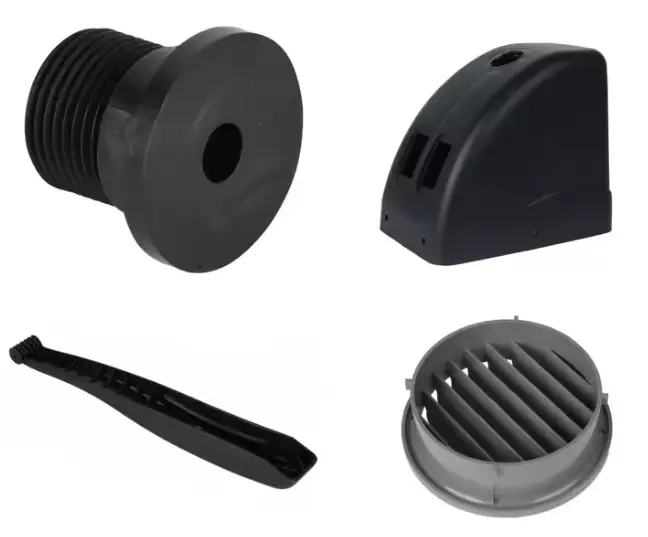
Quality Control in ABS Plastic Injection Molding
High-quality ABS molded plastic parts require:
- Dimensional inspection: Using calipers, CMM, or optical systems ensures excellent dimensional stability.
- Mechanical testing: Impact, tensile, and flexural strength verification for heat-resistant ABS molding.
- Visual inspection: Surface finish, color consistency, and absence of defects in ABS surface finish molding.
- Process documentation: Maintaining standards for ISO-certified ABS plastic injection molding services.
Consistent quality and manufacturing efficiency ensure injected molded parts meet specifications for industrial, consumer, and medical applications.
Conclusion
ABS plastic injection molding is a versatile, reliable, and cost-effective plastic material manufacturing process that produces durable, high-performance ABS products. With its design flexibility, impact resistance, and surface quality, ABS is used in a wide range of applications, including consumer electronics, automotive, industrial equipment, medical devices, and household appliances.
By following best practices in material selection, mold design, process control, and quality assurance, manufacturers can make ABS plastic components with excellent dimensional stability, reduce production costs, and improve efficiency.
Understanding the ABS plastic injection molding process empowers designers and engineers to create complex parts, ergonomic designs, and high-volume production runs confidently, delivering better ABS products to market faster.