

Engineering plastics play a critical role in modern plastic injection molding. As product designs become lighter, stronger, more compact, and more demanding, traditional commodity plastics such as polypropylene (PP) and polyethylene (PE) are often no longer sufficient. These standard plastics are easy to process, but their mechanical properties, heat resistance, and long-term durability are limited.
This is where engineering plastic materials and high-performance plastics step in. As a class of advanced thermoplastic materials, engineering plastics are specifically designed to meet higher mechanical strength, impact resistance, chemical resistance, and high-temperature requirements.
From automotive under-the-hood components and electrical connectors to medical devices, aerospace housings, and industrial plastic parts, engineering plastics deliver better mechanical performance, improved thermal properties, and superior dimensional stability. In many engineering applications, they have replaced traditional engineering materials such as metal, reducing weight, simplifying assembly, and lowering total system cost.
This article offers a practical, engineering-level overview of engineering plastics used in injection molding, covering their properties, performance characteristics, processing considerations, advantages, limitations, and real-world applications across the plastics industry.
What Are Engineering Plastics?
Engineering plastics are a category of engineering thermoplastics designed to perform under higher mechanical, thermal, and chemical stress compared to commodity plastics. As engineering polymers, they are formulated to maintain good mechanical properties across a wide temperature range while offering better chemical resistance and long-term reliability.
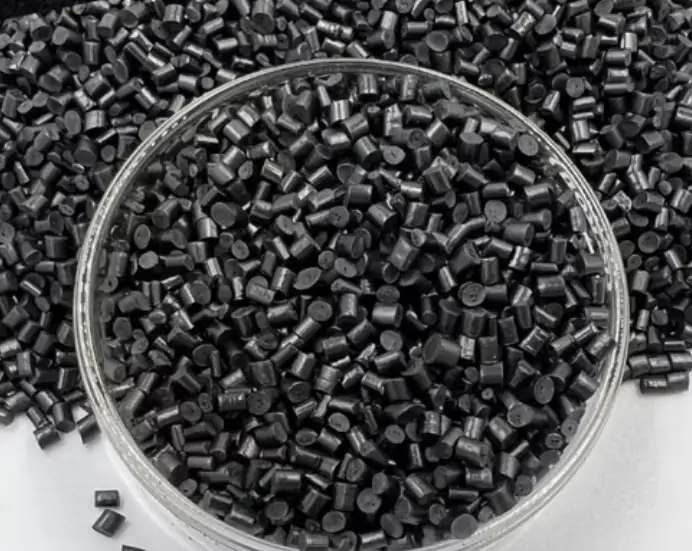
Compared with standard plastics, engineering plastics typically offer:
Higher mechanical strength and stiffness
Better impact strength and fatigue resistance
Improved heat resistance and high-temperature performance
Superior dimensional stability and creep resistance
Enhanced chemical resistance to oils, fuels, and solvents
Because of these characteristics, engineering plastics include materials widely used in load-bearing plastic products, precision plastic components, and structural plastic materials produced through injection molding processes.
Engineering Plastics vs Commodity Plastics
Understanding the difference compared to commodity plastics is essential when selecting plastic material for injection molding.
Commodity Plastics (e.g., PP, PE, PS)
Low material cost
Easy to process and mold
Limited mechanical strength and thermal properties
Best suited for packaging, disposable plastic products, and non-structural applications
Engineering Plastics (e.g., ABS, Nylon, Polycarbonate, POM, PBT)
Higher raw material cost
More demanding molding and processing control
Designed for functional, structural, and load-bearing plastic parts
Long service life and better mechanical performance
In many automotive and industrial applications, engineering thermoplastic materials replace metals and traditional engineering materials, delivering high performance while reducing weight and manufacturing complexity.
Key Performance Requirements for Engineering Plastics
When selecting engineering plastics for plastic injection molding, designers and engineers evaluate a combination of mechanical, thermal, and chemical properties rather than a single parameter.
Typical performance requirements include:
Mechanical strength and stiffness
Impact resistance and impact strength
Heat deflection temperature and high temperature capability
Chemical resistance to fuels, lubricants, and solvents
Electrical properties and insulation performance
Wear resistance and friction behavior
Dimensional stability, creep resistance, and long-term accuracy
No single polymer excels in all areas. Engineering plastic selection is always a balance between mechanical properties, thermal properties, molding behavior, and cost.
Common Engineering Plastics Used in Injection Molding
Below are some of the most common types of engineering plastics used in plastic injection molding, along with their properties and real-world engineering applications.
ABS (Acrylonitrile Butadiene Styrene)
ABS is one of the most widely used engineering thermoplastics due to its balanced mechanical properties, good impact resistance, and ease of molding.
Key Properties
Good impact resistance
Moderate heat resistance
Good mechanical strength and stiffness
Excellent surface finish
Stable dimensional stability
Injection Molding Characteristics
Medium melt flow suitable for injection molded parts
Sensitive to shear stress during molding
Requires controlled processing temperature
Common Applications
Consumer electronics housings
Automotive interior trim and automotive parts
Home appliance enclosures
Plastic engineering products and housings
ABS is commonly chosen when appearance, impact resistance, and process stability are equally important.

Polycarbonate (PC)
Polycarbonate is a high-performance plastic known for its exceptional impact strength and heat resistance.
Key Properties
Extremely high impact strength
Good heat resistance across a wide temperature range
Excellent dimensional stability
Good electrical properties
Available in transparent and reinforced grades
Injection Molding Considerations
High processing and molding temperature
Moisture-sensitive thermoplastic material requiring drying
Higher mold temperature for optimal mechanical properties
Common Applications
Safety lenses and protective covers
Medical device housings
Electrical and electronic components
Automotive lighting and optical plastic parts
Polycarbonate is ideal for injection-molded applications requiring impact resistance, clarity, and durability.
Nylon (Polyamide, PA)
Nylon, also known as polyamide, is one of the most versatile engineering plastic materials used in injection molding.
Key Properties
High mechanical strength and stiffness
Excellent wear resistance and fatigue resistance
Good heat resistance and thermal stability
Good chemical resistance to oils and fuels
Injection Molding Considerations
Moisture absorption affects dimensional stability
Thorough drying is required before molding
Shrinkage varies depending on grade and reinforcement
Common Applications
Gears, bearings, and moving plastic parts
Automotive engine components and automotive parts
Cable ties and fasteners
Industrial plastic components
Glass-fiber-reinforced plastics based on nylon are widely used as metal replacements in high-load engineering applications.
POM (Acetal / Polyoxymethylene)
POM is a precision engineering polymer known for low friction, stiffness, and dimensional stability.
Key Properties
High stiffness and good mechanical properties
Low friction coefficient
Excellent dimensional stability
Good wear resistance and fatigue behavior
Injection Molding Considerations
Narrow processing window
Sensitive to overheating during molding
Requires good mold venting
Common Applications
Precision gears and sliding components
Clips, fasteners, and snap-fit parts
Valve components and mechanisms
POM is widely used in precision plastic injection molding, where accuracy and low friction are critical.
PBT (Polybutylene Terephthalate)
PBT is a polyester engineering plastic valued for its electrical properties and thermal stability.
Key Properties
Good heat resistance
Excellent electrical insulation properties
Low moisture absorption
Good chemical resistance
Injection Molding Considerations
Fast crystallization behavior
Good mold release
Stable and consistent molding process
Common Applications
Electrical connectors and housings
Automotive sensors
Appliance and industrial plastic parts
PBT is widely used in electrical and electronic plastic injection molding applications.
PET (Polyethylene Terephthalate – Engineering Grades)
Beyond packaging, reinforced PET is used as an engineering thermoplastic material.
Key Properties
Good mechanical strength and stiffness
Chemical resistance
Dimensional stability under load
Injection Molding Considerations
Requires drying before molding
Sensitive to moisture
Common Applications
Electrical housings
Automotive components
Mechanical plastic parts
High-Performance Engineering Plastics
For extreme operating conditions, advanced engineering plastics and high-performance plastics are used. These advanced polymer materials are engineered to deliver excellent mechanical properties, superior chemical properties, and stable mechanical and thermal properties under harsh environments where traditional plastics and widely used commodity plastics fail.
High-performance engineering plastics are designed to maintain physical properties, mechanical performance, and dimensional stability across high temperature ranges, making them the material of choice for demanding industrial applications.
PPS (Polyphenylene Sulfide)
PPS is one of the common types of advanced engineering plastics used in injection-molded engineering plastics for harsh environments.
Key Properties
Excellent heat resistance and high temperature capability
Outstanding chemical resistance and chemical stability
High-dimensional stability and creep-resistant plastic material behavior
Naturally flame-retardant plastic with good electrical properties
Applications
Engineering plastics for automotive parts, such as under-hood components
Engineering plastics for electrical components, including connectors and housings
Engineering plastics for industrial equipment, such as pump components and mechanical parts
PPS is widely selected when plastics offer better properties than commodity plastics in high-heat and chemically aggressive environments.
PEEK (Polyether Ether Ketone)
PEEK is considered one of the highest-performance thermoplastic engineering resins available today.
Key Properties
Exceptional mechanical strength and high tensile strength
Very high heat resistance and thermal stability
Excellent chemical resistance and resistance to harsh environments
Outstanding wear performance, making it suitable for self-lubricating plastics and precision-engineered polymers
Applications
Aerospace components requiring lightweight engineering plastics
Medical applications such as implants and surgical components
High-end industrial applications involving durable plastic materials and long-life polymer materials
PEEK is expensive, but its unique combination of properties makes it unmatched in performance. In many cases, it has gradually replaced traditional engineering materials such as metal in critical mechanical engineering applications.
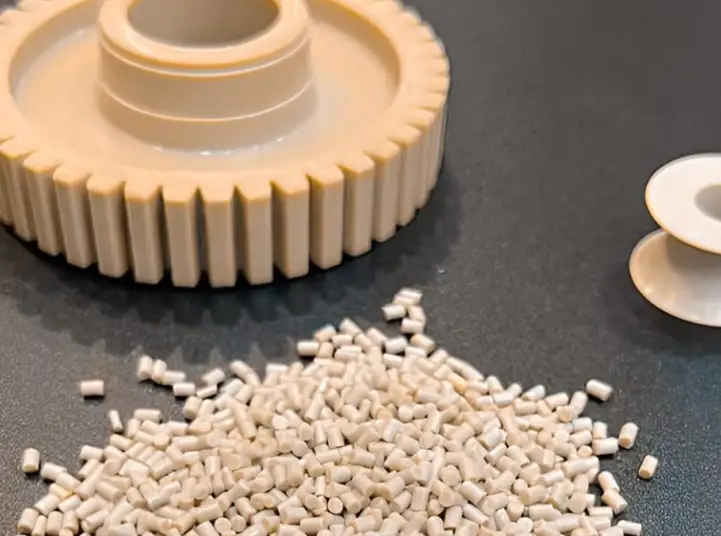
Engineering Plastics and Fillers
Many engineering plastics are reinforced with fillers to enhance material properties and mechanical performance. Reinforced plastic compounds are common examples of engineering plastics designed for structural and load-bearing engineering plastic parts.
Common Fillers
Glass fiber
Carbon fiber
Mineral fillers
Benefits of Reinforcement
Increased strength, stiffness, and high-stiffness plastic behavior
Reduced creep, improving long-term dimensional stability
Improved heat resistance and performance at elevated temperatures
Trade-Offs
Higher tool wear during molding
Directional shrinkage affecting plastic materials with tight tolerances
Reduced surface finish quality in some injection-molded engineering plastics
Glass-fiber-reinforced plastics require careful mold design, gate placement, and processing control to balance mechanical properties and surface requirements.
Injection Molding Design Considerations for Engineering Plastics
Engineering plastics in injection molding demand stricter design control than commodity plastics or traditional plastics.
Wall Thickness
Keep walls uniform to control shrinkage and warpage
Avoid thick sections that affect cooling and physical properties
Follow material-specific recommendations for thermoplastic engineering resins
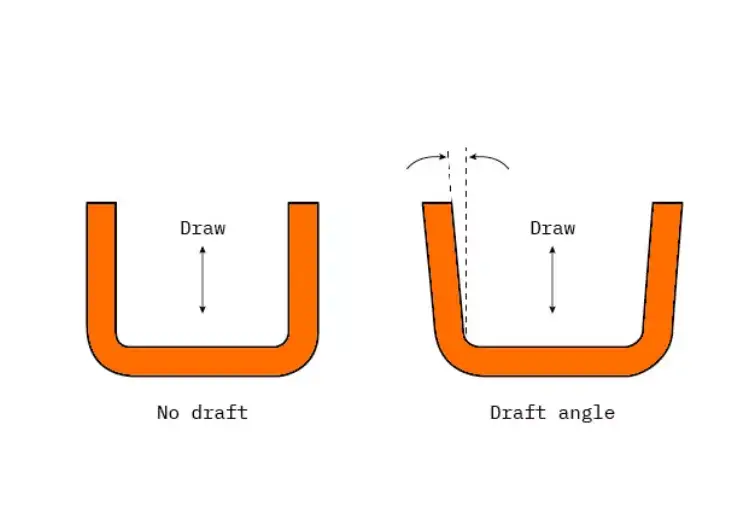
Draft Angles
Required even for high-strength plastic polymers
Textured surfaces need more draft due to stiffness and material behavior
Gates and Runners
Larger gates are often required for high-viscosity engineering polymers
Control shear stress to protect mechanical and thermal properties
Gate into thicker sections to support consistent filling
Cooling and Warpage
Engineering plastics are more sensitive to cooling imbalance than standard plastics
Proper mold temperature control is critical for the dimensional stability of plastics
Dimensional Stability and Tolerances
Engineering plastics offer better dimensional stability and tighter control than commodity plastics, but plastics are also viscoelastic materials.
DFM Tips
Avoid over-tight tolerances that ignore material properties
Consider post-mold conditioning for nylon (polyamide) materials
Use datum-based tolerancing for precision plastic injection molding
Material behavior, creep resistance, and thermal expansion must be factored into tolerance design for engineering plastic materials.
Engineering Plastics in Automotive Injection Molding
Automotive is one of the largest industrial applications for engineering plastics.
Typical Applications
Engine covers
Air intake manifolds
Electrical connectors and electronic components
Interior structural and noise-reduction plastic materials
Key requirements:
Heat resistance for under-hood environments
Vibration durability and mechanical performance
Long-term performance and resistance to automotive fluids
Engineering plastics for automotive parts have gradually replaced traditional engineering materials, delivering lighter weight, corrosion resistance, and better design freedom.
Engineering Plastics in Electrical and Electronics
Electrical and electronics applications rely heavily on engineering plastics for safety and reliability.
Typical Applications
Switch housings
Terminal blocks
Sensor housings
Connectors and electronic components
Key requirements:
Electrically insulating plastics with stable electrical properties
Flame-retardant plastics meeting regulatory standards
High-dimensional precision for injection-molded engineering plastics
These plastic materials are widely used where properties compared to commodity plastics provide clear performance advantages.
Engineering Plastics in Medical Devices
Medical injection molding requires strict material and process control.
Typical Applications
Diagnostic device housings
Surgical instrument handles
Drug delivery components
Key requirements:
Biocompatibility
Sterilizability without loss of material properties
Clean surface finish for medical applications
Many engineering plastics are selected for medical applications due to their excellent mechanical properties, chemical resistance, and process consistency.

Engineering Plastics vs Metal Replacement
Engineering plastics offer a viable plastic alternative to metal in many applications.
Advantages
Weight reduction using lightweight engineering plastics
Corrosion resistance compared to metal parts
Design freedom and integrated features
Reduced assembly complexity for injection-molded engineering plastics
Challenges
Lower absolute strength compared to metals
Temperature limits depending on polymer selection
Creep behavior over long-term loading
Proper material selection, design optimization, and understanding of the properties of commodity plastics are essential for successful metal replacement.
Sustainability and Engineering Plastics
Sustainability is becoming an increasingly important consideration across the plastics industry.
Current Trends
Bio-based engineering plastics
Recyclable reinforced plastic materials
Lightweighting strategies to reduce energy use and plastic waste
Balancing performance, durability, and sustainability is a growing focus in engineering plastics and injection molding.
Choosing the Right Engineering Plastic
When selecting from the wide range of engineering plastics, consider:
Mechanical requirements and specific properties
Operating temperature range and thermal properties
Environmental exposure and chemical properties
Regulatory standards for medical, automotive, or electrical use
Cost, availability, and long-term supply
Material selection should involve designers, molders, and material suppliers early to ensure the right engineering thermoplastic material is chosen.
Final Thoughts: Engineering Plastics Drive Modern Injection Molding
Engineering plastics have transformed plastic injection molding and modern manufacturing. They enable the production of engineering plastic products that are stronger, lighter, more complex, and more durable than parts made from traditional plastics or widely used commodity plastics.
However, higher performance comes with higher responsibility. Engineering plastics are designed to deliver excellent mechanical and thermal properties, but they demand:
Proper part design
Correct molding and processing control
Careful material selection
When used correctly, engineering plastics offer exceptional value across automotive, electronics, medical, aerospace, and industrial applications. In today’s competitive manufacturing landscape, mastering engineering plastics is no longer optional—it is a decisive competitive advantage.