

Dimensional accuracy is one of the most critical quality requirements in injection-molded plastic parts. Even minor dimensional deviations can lead to assembly problems, functional failures, cosmetic defects, or product recalls.
As industries demand tighter tolerances, thinner walls, and higher part complexity, inspecting injection molded parts for dimensional accuracy has become a core responsibility of quality engineers, tooling specialists, and production managers.
This guide provides a comprehensive, practical overview of how to inspect injection molded parts for dimensional accuracy, covering inspection methods, measurement tools, tolerances, process control, common defects, and best practices used in modern injection molding operations.
What Is Dimensional Accuracy in Injection Molding?
Dimensional accuracy refers to how closely the final molded part matches the design dimensions specified in the drawing or CAD model.
In injection molding, accuracy is affected by:
- Material shrinkage
- Mold design and machining accuracy
- Processing parameters
- Cooling conditions
- Mold wears over time
Because plastic parts shrink and deform during cooling, achieving consistent dimensions requires both precise molding and systematic inspection.
Why Dimensional Accuracy Inspection Is Critical
Failing to inspect injection molded parts accuracy can lead to serious downstream problems.
Risks of Poor Dimensional Control
- Assembly misalignment
- Loose or tight fits
- Electrical connection failures
- Sealing and leakage issues
- Excessive wear
- Cosmetic rejection
- Increased scrap and rework costs
For industries such as automotive, medical, electronics, and aerospace, dimensional inspection is not optional—it is mandatory.

When to Inspect Injection Molded Parts
Dimensional inspection should be performed at multiple stages of the production process.
Key Inspection Stages
- First Article Inspection (FAI)
- In-Process Inspection
- Final Inspection
- Ongoing Statistical Sampling
- Post-Maintenance or Tool Change Inspection
Each stage serves a different quality assurance purpose.
First Article Inspection (FAI)
What Is First Article Inspection?
First Article Inspection is the initial dimensional verification performed on the first molded parts produced from a new mold or after major changes.
Purpose of FAI
- Validate mold accuracy
- Confirm process capability
- Verify critical dimensions
- Approve parts before mass production
FAI typically involves measuring all critical and major dimensions specified on the drawing.
Understanding Tolerances for Injection Molded Parts
Before inspect injection molded parts begins, it is essential to understand acceptable tolerances.
Typical Injection Molding Tolerances
- Standard tolerance: ±0.1 mm to ±0.2 mm
- Precision molding: ±0.02 mm to ±0.05 mm
- Micro molding: ±0.005 mm to ±0.01 mm
Tolerance capability depends on:
- Part size and geometry
- Material type
- Mold quality
- Process stability
Always refer to engineering drawings and GD&T symbols for inspection criteria.
Key Dimensions to Inspect
Not all dimensions carry the same importance.
Critical Dimensions
- Mating and fit dimensions
- Sealing surfaces
- Electrical connector interfaces
- Functional holes and bosses
Major Dimensions
- Overall length, width, and height
- Wall thickness
- Flatness and parallelism
Minor Dimensions
- Cosmetic features
- Non-functional ribs or textures
Inspection focus should prioritize critical and functional dimensions.
Common Measurement Tools for Dimensional Inspection
Different tools are used depending on part size, tolerance requirements, and production volume.
Calipers
Types of Calipers
- Digital calipers
- Vernier calipers
- Dial calipers
Applications
- Overall dimensions
- Slot widths
- Simple hole diameters
Advantages
- Fast and easy to use
- Low cost
- Suitable for shop-floor inspection
Limitations
- Limited accuracy (typically ±0.02 mm)
- Operator-dependent results
Calipers are best for non-critical dimensions and quick checks.
Micrometers
Types of Micrometers
- Outside micrometers
- Inside micrometers
- Depth micrometers
Applications
- Wall thickness
- Precision diameters
- Tight-tolerance features
Advantages
- High accuracy (±0.001 mm)
- Good repeatability
Limitations
- Slower measurement
- Limited measurement range
Micrometers are ideal for precision inspection of critical features.
Height Gauges and Surface Plates
Applications
- Height measurement
- Flatness verification
- Perpendicularity checks
Advantages
- Stable reference surface
- Good for GD&T features
Limitations
- Requires a controlled environment
- Not suitable for complex geometries
Often used in quality labs rather than production floors.
Pin Gauges and Go/No-Go Gauges
Applications
- Hole diameter verification
- Thread checks
- Pass/fail inspection
Advantages
- Fast inspection
- Reduces operator variation
- Ideal for high-volume production
Limitations
- No numerical data
- Limited to specific dimensions
Go/No-Go gauges are excellent for process monitoring.
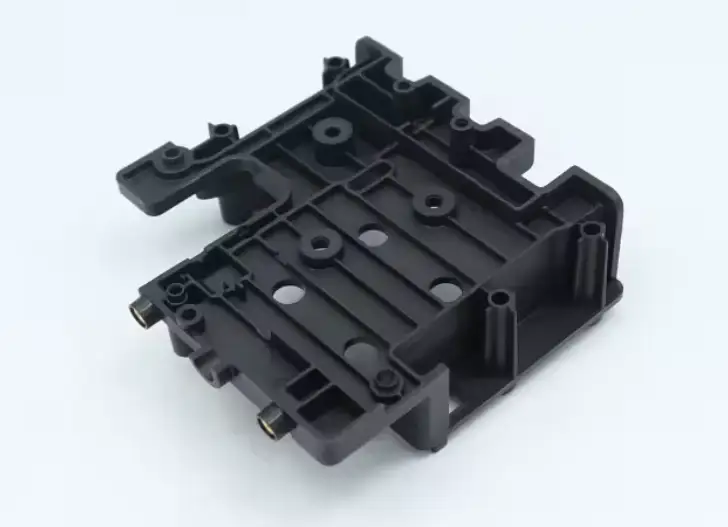
Coordinate Measuring Machines (CMM)
What Is a CMM?
A CMM uses a precision probe to measure the 3D coordinates of part features.
Applications
- Complex geometries
- Tight tolerances
- Full-dimensional reports
Advantages
- Extremely high accuracy
- Repeatable results
- Supports GD&T evaluation
Limitations
- Higher cost
- Slower cycle time
- Requires skilled operators
CMMs are the gold standard for precision injection-molded parts.
Optical and Vision Measurement Systems
Types
- Optical comparators
- Vision measuring machines
- Laser scanners
Applications
- Small or delicate parts
- Transparent components
- Micro injection molded parts
Advantages
- Non-contact measurement
- Fast data collection
- Ideal for fragile parts
Limitations
- Sensitive to lighting and surface finish
- Higher equipment cost
Widely used in electronics and medical molding.
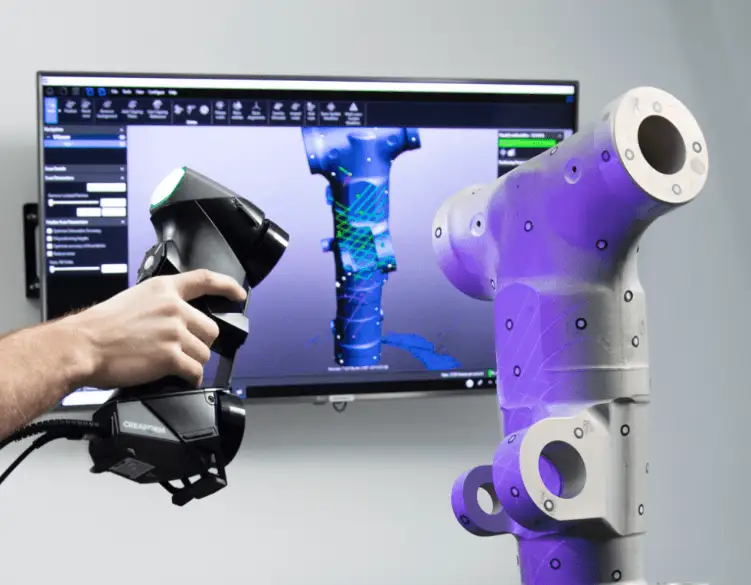
3D Scanning for Dimensional Inspection
How It Works
3D scanners capture full part geometry and compare it to CAD data.
Applications
- Complex freeform shapes
- Warpage analysis
- Mold validation
Advantages
- Full-field measurement
- Visual deviation maps
- Fast comparison to CAD
Limitations
- Lower accuracy than CMM for tight tolerances
- Data processing required
Best used for trend analysis and deformation studies.
Environmental Factors Affecting Measurement Accuracy
Plastic parts are sensitive to environmental conditions.
Key Factors
- Temperature
- Humidity
- Part conditioning time
Best Practices
- Allow parts to stabilize after molding
- Measure at controlled room temperature (20–23°C)
- Follow ISO measurement standards
Ignoring environmental effects can lead to false rejection or acceptance.
Common Dimensional Defects in Injection Molded Parts
Understanding defects helps guide inspection focus.
Warpage
- Caused by uneven cooling or material stress
- Leads to flatness and alignment issues
Shrinkage Variation
- Inconsistent cooling or packing pressure
- Results in out-of-tolerance dimensions
Flash
- Excess material at parting lines
- Affects critical dimensions
Sink Marks
- Localized shrinkage near thick sections
- Alters surface geometry
Inspection methods must account for these defects.
Statistical Process Control (SPC) in Dimensional Inspection
SPC helps maintain consistency over long production runs.
Key SPC Tools
- Control charts
- Cp and Cpk analysis
- Sampling plans
Benefits
- Early detection of process drift
- Reduced scrap rates
- Data-driven decision making
SPC transforms inspection from reactive to preventive.
Sampling Plans for Dimensional Inspection
Inspecting every part is often impractical.
Common Sampling Methods
- AQL sampling
- Fixed interval sampling
- Risk-based sampling
Sampling frequency depends on:
- Part criticality
- Process stability
- Customer requirements
Dimensional Inspection During Production
In-process inspection helps catch issues early.
Best Practices
- Monitor critical dimensions regularly
- Use go/no-go gauges at machines
- Record data for trend analysis
Early detection reduces costly downstream failures.
Mold Maintenance and Dimensional Accuracy
Tool wear directly affects dimensions.
Inspection After Maintenance
- Verify cavity dimensions
- Confirm alignment
- Re-approve critical features
Dimensional inspection after mold repair or polishing is essential.
Documentation and Traceability
Accurate records support quality audits and customer confidence.
Key Documents
- Inspection reports
- FAI records
- SPC charts
- Calibration logs
Traceability is especially important for regulated industries.
Best Practices for Inspecting Injection Molded Parts
Summary Checklist
- Understand critical dimensions
- Use appropriate measurement tools
- Control environmental conditions
- Inspect at multiple production stages
- Apply SPC methods
- Maintain calibration schedules
- Document results consistently
A systematic approach ensures repeatable and reliable inspection outcomes.
Conclusion
Inspecting injection-molded parts for dimensional accuracy is a cornerstone of modern plastic manufacturing. With shrinking tolerances, complex geometries, and rising quality expectations, dimensional inspection must be accurate, consistent, and data-driven.
By selecting the right measurement tools, implementing structured inspection processes, and integrating statistical process control, manufacturers can ensure that every molded part meets design intent and functional requirements.
Ultimately, effective dimensional inspection protects product quality, reduces waste, and strengthens trust between molders and customers—making it an essential investment in long-term manufacturing success.