

Understanding injection molding cost is essential for manufacturers, product designers, and sourcing managers who want to control budgets, reduce risk, and scale production efficiently. While injection molding is one of the most cost-effective manufacturing processes for high-volume plastic parts, its true cost structure is often misunderstood.
Injection molding cost is not a single number—it is the result of multiple interrelated factors, including material selection, tooling investment, labor requirements, machine time, and secondary operations. Making informed decisions at each stage can significantly reduce per-part cost without sacrificing quality or performance.
In this comprehensive guide, we break down injection molding costs into three core components—materials, tooling, and labor—and explain how each impacts total production cost. We also explore hidden costs, cost-reduction strategies, and real-world considerations for different industries.
Understanding Injection Molding Cost Structure
Injection molding cost can be divided into two main categories:
- Upfront (fixed) costs – One-time or semi-fixed expenses such as mold design and tooling
- Recurring (variable) costs – Costs that scale with production volume, including materials, labor, and machine time
The higher the production volume, the more fixed tooling costs are amortized, which is why injection molding is especially attractive for medium- to high-volume manufacturing.
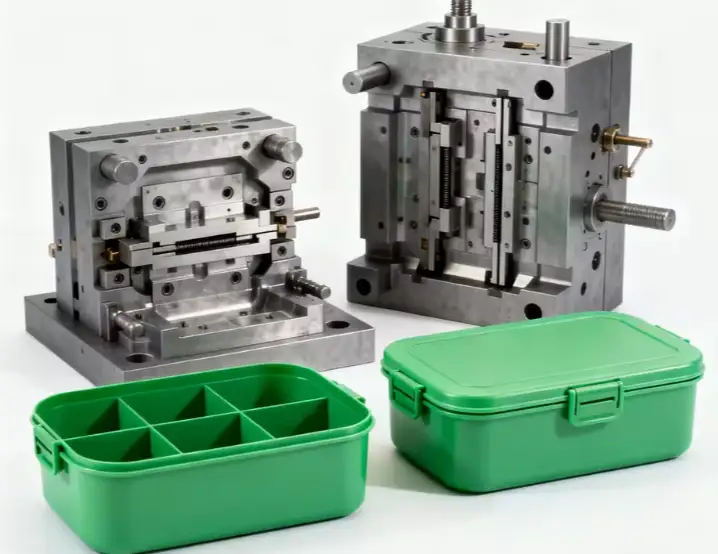
Material Costs in Injection Molding
1. Raw Plastic Material Cost
Material cost is one of the most visible components of injection molding pricing. The choice of thermoplastic or thermoset material directly affects both part performance and cost.
Common injection molding materials and relative cost ranges:
- Polypropylene (PP) – Low cost, lightweight, chemical resistant
- Polyethylene (PE) – Very cost-effective, flexible
- ABS – Moderate cost, good impact resistance
- Polycarbonate (PC) – Higher cost, high strength, and clarity
- Nylon (PA6 / PA66) – Moderate to high cost, strong, and durable
- POM (Acetal) – Moderate cost, excellent dimensional stability
- PPS, PEEK, PEI – High-performance plastics with premium pricing
High-performance engineering plastics can cost 5–10× more than commodity plastics, but they may reduce wall thickness, extend service life, or eliminate metal components—offsetting their higher price.
2. Material Usage and Part Weight
Material cost is calculated based on:
- Part weight
- Runner and gate waste
- Scrap rate
- Regrind usage
Reducing part weight by even a few grams can significantly lower material cost in high-volume production.
Cost-saving strategies include:
- Wall thickness optimization
- Rib-based structural reinforcement
- Hot runner systems to eliminate cold runners
- Regrind usage (where allowed)
3. Reinforced and Filled Materials
Adding fillers or fibers changes both cost and performance.
- Glass fiber reinforced plastics – Moderate cost increase, improved stiffness
- Carbon fiber reinforced plastics – High cost, lightweight, and high strength
- Mineral-filled plastics – A cost-effective way to improve dimensional stability
Reinforced materials may increase tooling wear and cycle time, indirectly affecting labor and machine costs.

4. Material Preparation and Handling
Hidden material-related costs include:
- Drying hygroscopic materials (nylon, PC, PET)
- Material storage and handling
- Colorants and masterbatches
- Moisture control and quality inspection
Improper material handling can lead to defects, increasing scrap and rework costs.
Tooling Costs in Injection Molding
1. Injection Mold Cost Overview
Tooling is the highest upfront cost in injection molding. Mold prices vary widely based on:
- Part size and complexity
- Number of cavities
- Mold material (steel vs aluminum)
- Expected production volume
- Tolerance requirements
Typical mold cost ranges:
- Simple prototype mold: $1,500 – $5,000
- Production aluminum mold: $5,000 – $20,000
- Steel production mold: $15,000 – $100,000+
2. Mold Design and Engineering
Mold design cost includes:
- DFM (Design for Manufacturability) analysis
- Mold flow simulation
- Cooling and runner system design
- Gate location optimization
Investing in proper mold design upfront reduces long-term costs by minimizing defects, shortening cycle time, and extending mold life.
3. Mold Material Selection
- Aluminum molds
- Lower cost
- Faster lead time
- Suitable for low- to medium-volume production
- Steel molds (P20, H13, S136)
- Higher cost
- Longer lifespan
- Required for high-volume or abrasive materials
Choosing the right mold material balances tooling cost vs production durability.
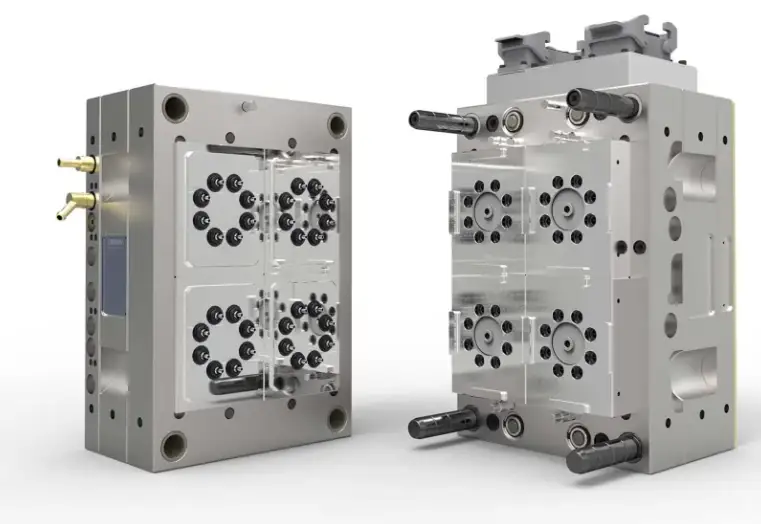
4. Multi-Cavity and Family Molds
- Single-cavity molds – Lower upfront cost, higher per-part cost
- Multi-cavity molds – Higher tooling cost, lower per-part cost
- Family molds – Mold multiple part variants together
Multi-cavity molds dramatically reduce labor and machine time per part in high-volume production.
5. Tool Maintenance and Lifecycle Costs
Tooling cost does not end after mold fabrication.
Ongoing expenses include:
- Preventive maintenance
- Mold cleaning and polishing
- Insert replacement
- Repairs due to wear or damage
Poor maintenance increases downtime and defect rates, raising total production cost.
Labor Costs in Injection Molding
1. Machine Operation Labor
Labor cost depends on:
- Level of automation
- Machine size and complexity
- Production location
Manual operations require more labor, while automated systems reduce labor cost per part.
Labor activities include:
- Machine setup and changeover
- Material loading
- Process monitoring
- Quality inspection
2. Setup and Changeover Time
Setup cost is often overlooked but significant for short production runs.
Factors affecting setup cost:
- Mold installation and alignment
- Parameter tuning
- First-article inspection
Frequent changeovers increase labor and downtime costs.
3. Secondary Operations
Additional labor may be required for:
- Trimming and deflashing
- Assembly
- Ultrasonic welding
- Pad printing or labeling
Designing parts to minimize secondary operations can greatly reduce total labor cost.
4. Automation vs Manual Labor
Automation increases initial investment but lowers long-term labor costs.
Examples include:
- Robotic part removal
- Automated insert loading
- Vision-based inspection
- Conveyor systems
High-volume projects benefit most from automation due to lower labor costs per unit.
Machine Time and Overhead Costs
Although not always itemized separately, machine time is a major cost driver.
Machine cost depends on:
- Clamp tonnage
- Energy consumption
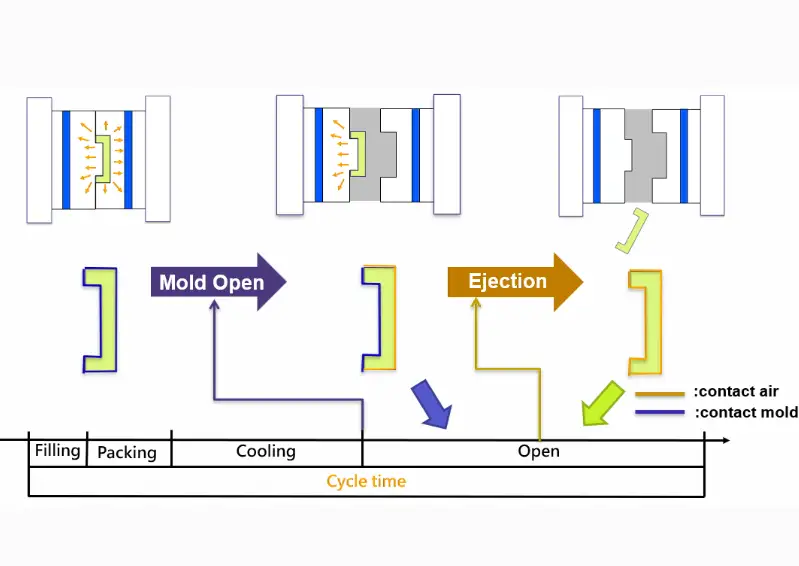
- Cycle time
Shorter cycle times reduce:
- Machine cost per part
- Labor involvement
- Energy usage
Optimizing cycle time is one of the most effective ways to reduce overall injection molding cost.
Hidden and Indirect Costs
Injection molding costs often include indirect factors:
- Scrap and rework
- Quality failures
- Downtime and delays
- Logistics and packaging
- Compliance and certification (medical, automotive)
Ignoring these costs leads to inaccurate cost estimates.
Cost Reduction Strategies in Injection Molding
Design-Level Cost Reduction
- Optimize wall thickness
- Reduce part weight
- Avoid unnecessary tight tolerances
- Design for automation
Process-Level Cost Reduction
- Optimize cycle time
- Improve cooling efficiency
- Reduce scrap rates
- Implement process monitoring
Supply-Chain Cost Reduction
- Select cost-effective materials
- Use local or stable suppliers
- Standardize components
Injection Molding Cost by Production Volume
| Volume | Cost Structure |
|---|---|
| Low volume | Tooling dominates cost |
| Medium volume | Balanced tooling and unit cost |
| High volume | Unit cost becomes very low |
Injection molding becomes increasingly cost-effective as volume increases due to tooling amortization.
Industry-Specific Cost Considerations
Automotive
- High tooling cost, very low unit cost
- Strict quality and durability requirements
Medical Devices
- Higher labor and validation cost
- Cleanroom and compliance expenses
Consumer Products
- Cost sensitivity
- Emphasis on aesthetics and fast cycle times
Industrial Components
- Durable materials
- Lower volume, higher per-part cost
Choosing the Right Injection Molding Partner
A skilled manufacturer can significantly reduce your total cost.
Look for a partner that offers:
- DFM and cost optimization support
- Transparent pricing
- Advanced tooling capabilities
- Automation expertise
- Quality certifications
The right partner focuses on total cost of ownership, not just piece price.
Conclusion
Understanding “injection molding cost breakdown—materials, tooling, and labor” is critical for making informed manufacturing decisions. While tooling represents a major upfront investment, material selection, labor efficiency, machine utilization, and design optimization all play essential roles in determining total production cost.
By optimizing design, choosing the right materials, investing in efficient tooling, and working with an experienced injection molding manufacturer, companies can achieve high-quality parts at competitive costs, even in demanding applications.
Injection molding remains one of the most scalable, reliable, and cost-effective manufacturing solutions when its cost structure is properly understood and managed.