

In today’s fast-paced manufacturing environment, time-to-market is critical. Production delays can impact costs, customer satisfaction, and overall competitiveness. For companies relying on plastic injection molding, reducing lead times is not just desirable—it’s essential.
Plastic injection molding is a widely used process for producing complex plastic parts in industries such as automotive, electronics, medical devices, packaging, and consumer goods. While it offers high precision, repeatability, and scalability, it can sometimes involve long lead times due to tooling, material selection, design revisions, and production scheduling.
This guide explores practical strategies to shorten plastic injection molding lead times, from initial design to final delivery, while maintaining quality and cost-effectiveness.
Understanding Lead Times in Injection Molding
Lead time refers to the total time required to manufacture a plastic part, from the moment a project is initiated to when the finished product is delivered. It typically includes:
- Design and Engineering – CAD modeling, DFM (Design for Manufacturability) review, and design revisions.
- Tooling and Mold Fabrication – CNC machining, EDM, polishing, and testing of molds.
- Material Procurement – Ordering raw plastic resins and additives.
- Injection Molding Production – Actual molding, cycle times, post-processing, and assembly.
- Inspection and Shipping – Quality checks, packaging, and logistics.
Long lead times are often caused by complex molds, iterative design changes, long material supply cycles, or inefficient production workflows.
By addressing each stage strategically, manufacturers can significantly reduce overall production time.
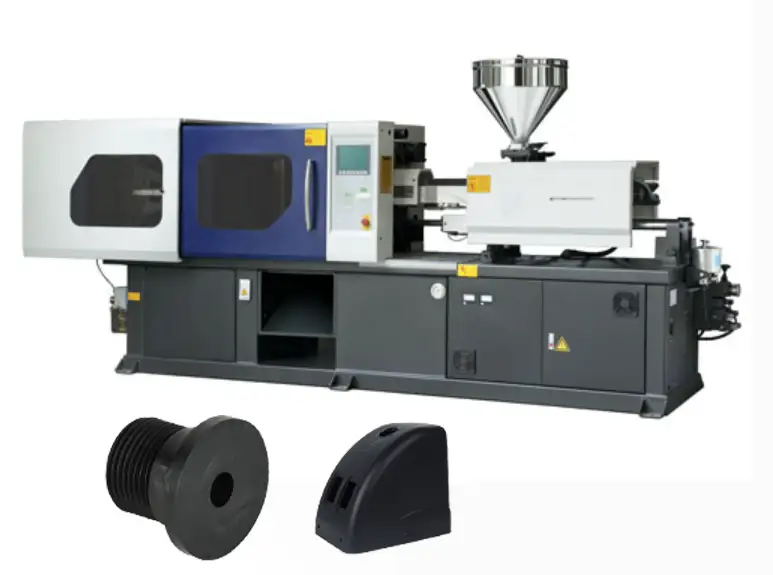
Optimize Part Design for Faster Production
Design for Manufacturability (DFM) is critical in reducing lead times. Parts that are easier to mold require simpler tooling and fewer iterations.
Key DFM Principles:
- Uniform Wall Thickness: Prevents warping and sink marks, reducing molding defects and cycle adjustments.
- Avoid Undercuts and Complex Features: Minimizes the need for side-actions or complex tooling.
- Add Draft Angles: Facilitates easier part ejection from the mold.
- Simplify Geometry: Reduces machining time for the mold and accelerates production cycles.
- Incorporate Standard Inserts: Using off-the-shelf inserts or components can reduce tooling lead times.
Early DFM consultation with an experienced injection molding partner ensures that the design is production-ready, reducing delays caused by trial-and-error adjustments.
Use Rapid Prototyping and Mold Testing
Waiting for final mold fabrication before testing can significantly prolong lead times. Rapid prototyping allows early validation of form, fit, and function.
Options Include:
- 3D Printing: Create plastic prototypes to test dimensions and ergonomics.
- CNC Machining: Produce functional prototypes in production-grade materials.
- Soft or Aluminum Molds: Test mold designs before committing to expensive steel tooling.
Validating designs early helps identify issues that could otherwise delay mass production.
Choose the Right Injection Mold Material
The mold material directly impacts lead times:
- Aluminum Molds: Faster to machine and ideal for low to medium volumes.
- Steel Molds: More durable but require longer machining time, suitable for high-volume production.
By selecting the appropriate mold material based on volume, part complexity, and longevity requirements, you can balance speed and cost effectively.
Maintain an Efficient Tooling Process
Tooling often represents the largest portion of lead time in injection molding. Optimizing mold fabrication can drastically reduce project delays.
Strategies Include:
- Parallel Machining: Multiple mold components can be machined simultaneously.
- Standardized Components: Use pre-machined mold bases and standard hardware.
- In-House Tooling: Having mold-making capabilities on-site accelerates communication and iteration.
- Quick Mold Trials: Test critical features early to catch defects before full-scale production.
Streamlined tooling reduces the risk of rework and iterative delays.
Optimize Material Procurement
Material availability can cause unexpected delays. Reduce lead time by:
- Forecasting Material Needs Early: Avoid waiting for suppliers during mold or production phases.
- Using Widely Available Materials: Common resins like ABS, PP, and PE are faster to source than specialized engineering plastics.
- Maintaining Safety Stock: Keep a buffer of commonly used materials to prevent interruptions.
- Local Suppliers: Reduce shipping and customs delays by sourcing closer to production facilities.
Efficient material management ensures production can start as soon as molds are ready.
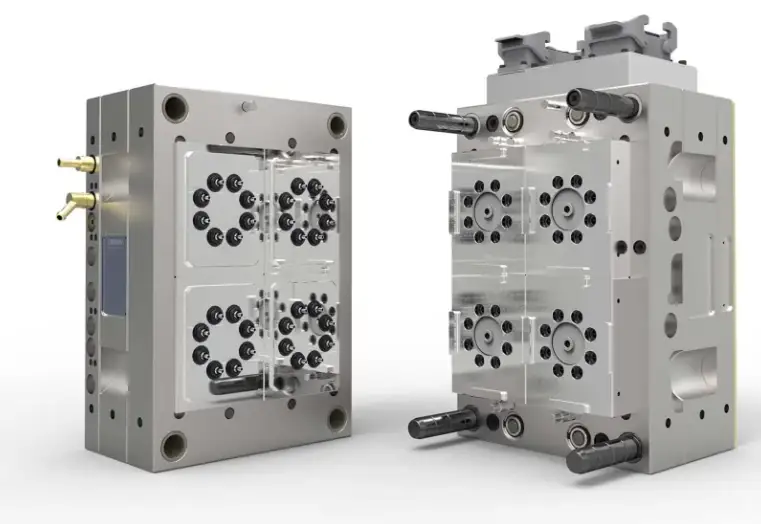
Leverage Multi-Cavity and Family Molds
For higher production volumes, consider:
- Multi-Cavity Molds: Produce multiple identical parts per cycle, reducing overall run time.
- Family Molds: Produce multiple part types in a single mold, reducing setup time for separate molds.
These approaches increase throughput without compromising quality and are particularly effective when combined with automation and robotic part handling.
Minimize Design Revisions and Approvals
Frequent design changes are a major cause of lead time delays. Reduce iteration cycles by:
- Early Stakeholder Involvement: Engage engineers, designers, and quality teams in the initial design phase.
- Digital Prototyping and Simulation: Use mold flow analysis to predict defects and optimize part geometry before mold fabrication.
- Clear Approval Processes: Streamline internal approvals to prevent bottlenecks.
Efficient communication between design, tooling, and production teams can save weeks of unnecessary delay.
Optimize Injection Molding Production
Once tooling is ready, production efficiency determines the final lead time.
Techniques Include:
- Scientific Molding: Use precise temperature, pressure, and injection speed control for consistent cycle times.
- Automation: Employ robotic part removal, assembly, or packaging to reduce manual handling.
- Real-Time Monitoring: Detect defects early, preventing wasted cycles and rework.
- Preventive Maintenance: Keep machines running smoothly to avoid unexpected downtime.
A combination of skilled operators and automated systems maximizes throughput and minimizes delays.
Implement Lean Manufacturing Practices
Lean principles reduce waste and streamline production, leading to faster delivery:
- 5S Workplace Organization: Ensures tools, molds, and materials are readily accessible.
- Kanban or Just-in-Time Inventory: Reduces wait times for materials and components.
- Continuous Improvement (Kaizen): Gradual process improvements cut bottlenecks and inefficiencies.
A lean approach keeps production moving smoothly and reduces non-value-added time.
Collaborate With an Experienced Injection Molding Partner
One of the most effective ways to reduce lead time is to work with a partner experienced in fast, reliable plastic injection molding.
Benefits include:
- Expertise in DFM and material selection
- Optimized tooling design and fabrication
- Streamlined production scheduling and logistics
- Access to rapid prototyping and testing
- Reduced risk of errors and rework
A strong manufacturing partner can predict and prevent delays, keeping projects on schedule from prototype to full-scale production.
Consider Post-Processing Efficiency
Post-processing can sometimes extend lead times unnecessarily. Optimize by:
- Integrating Finishing Steps: Combine trimming, deburring, and polishing in-line where possible.
- Use Automated Inspection Systems: Faster detection of defects compared to manual checks.
- Batch Post-Processing: Process multiple parts simultaneously to reduce cycle time.
Efficient post-processing ensures parts are ready for shipment faster.
Plan Logistics and Delivery in Advance
Even after production, shipping can add days or weeks to lead times. Mitigate delays by:
- Working With Reliable Shipping Partners
- Consolidating Shipments for bulk orders
- Providing Accurate Documentation to prevent customs delays
- Using Local Warehousing for near-term deliveries
A well-organized supply chain complements fast production.
Real-Life Example: Lead Time Reduction
Consider a company manufacturing custom medical device housings. Initially, the total lead time was 12 weeks due to complex mold design, material shortages, and multiple design iterations. By applying the strategies above:
- Early DFM consultation reduced mold revisions.
- Aluminum prototype molds enabled rapid testing.
- Multi-cavity molds increased output per cycle.
- Streamlined approvals and material pre-ordering prevented delays.
The result? Lead time dropped to 6 weeks, enabling faster product launch without sacrificing quality.
Key Takeaways: Reducing Injection Molding Lead Times
- Design for Manufacturability to minimize tooling complexity.
- Use rapid prototyping and mold testing to validate designs early.
- Select the right mold and material for your production volume.
- Streamline tooling fabrication with in-house or parallel machining.
- Plan material procurement and maintain stock to avoid delays.
- Leverage multi-cavity and family molds for higher throughput.
- Reduce design revisions through simulation and stakeholder alignment.
- Optimize production processes using scientific molding and automation.
- Implement lean manufacturing to eliminate waste.
- Collaborate with experienced partners to anticipate and prevent bottlenecks.
- Integrate post-processing efficiently to save time.
- Plan logistics for timely delivery.
Conclusion
Reducing plastic injection molding lead times requires a combination of engineering foresight, process optimization, and strong collaboration. By addressing design, tooling, material selection, production efficiency, and supply chain management, manufacturers can achieve faster turnaround, lower costs, and reliable delivery schedules.
Whether you are a startup launching a new product or an established company scaling production, applying these strategies will help you bring products to market faster without compromising quality.
Partnering with an experienced injection molding manufacturer is one of the most effective ways to shorten lead times. Their expertise can guide every stage of the project, ensuring predictable, high-quality results from prototype to mass production.
By focusing on efficiency at every step, companies can turn injection molding from a potential bottleneck into a competitive advantage.