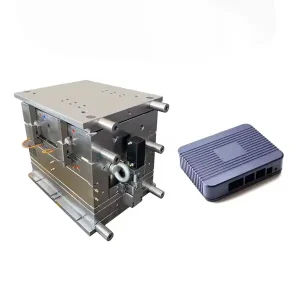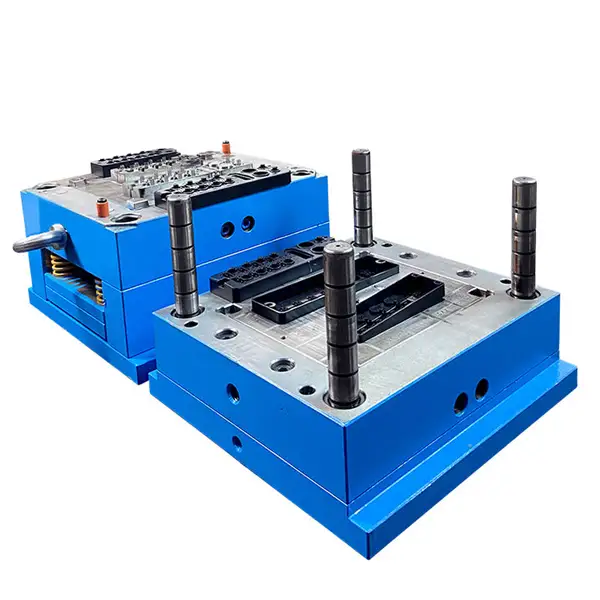
Custom mold for injection molding machine with AIM plastic, with design and engineering support, OEM, ODM, injection mold making, shipment support
The mold is the heart of any plastic injection molding machine. While the injection molding machine itself provides clamping force, injection pressure, and temperature control, the injection mold ultimately defines the plastic part shape, surface quality, dimensional accuracy, cycle time, and overall injection performance.
A well-engineeredmold for injection molding machine can run millions of cycles reliably in mass production. A poorly designed mold, however, leads to defects, downtime, extended lead time, and costly rework.
This article provides a complete and practical guide to molds for plastic injection, covering mold structure, working principles, common mold types, materials, mold design, mold making, and long-term maintenance considerations used by professional mold makers and injection molding services.
[bg_collapse_level2 view=”link” color=”#e34507″ icon=”arrow” expand_text=”Read More” collapse_text=”Read Less” ]
In plastic injection molding, a mold for injection molding machine is a precision metal mold mounted on an injection machine. Molten plastic resin is injected into the mold cavity, cooled, and ejected as a finished molded part.
An injection mold directly determines:
Part geometry and surface finish
Dimensional accuracy and tolerance
Cycle time and cooling efficiency
Production efficiency and repeatability
Overall tooling and manufacturing cost
For high-volume production, the injection mold tooling often represents the largest upfront investment, especially for steel mold for injection molding machine used in automotive, medical, and industrial applications.
The plastic injection molding process follows a strict cycle controlled by the plastic injection molding machine and the mold:
Mold Closing – The machine clamps the mold halves together
Injection – Melted plastic is injected into the cavity
Packing & Holding – Pressure compensates for material shrinkage
Cooling – Plastic solidifies inside the mold cooling system
Mold Opening – The injection molding machine opens the mold
Ejection – The injection mold components eject the finished part
Every step relies on proper mold design for injection molding, precise machining (often using CNC machines), and stable mold temperature control.
Although mold for injection molding machines designs vary based on production requirements, most plastic injection molds share common structural elements.
The injection mold base supports all tooling components and allows secure mounting onto the plastic injection molding machine.
Typical elements include:
Clamping plates
Support plates
Spacer blocks
Guide pillars and bushings
A robust mold base ensures dimensional stability under high clamping forces, whether for small parts, large components, or benchtop plastic injection molding systems.
The core and cavity mold define the final plastic part:
Cavity – Forms the outer surface
Core – Forms internal features
Precision machining, polishing, and material selection directly affect surface quality, tolerance, and part life. High-precision tooling is common in custom injection mold fabrication and precision mold for injection molding machine manufacturing.
The runner system transfers molten plastic from the machine nozzle into the cavity.
Cold Runner Mold
Lower mold cost
More material waste
Longer cycle time
Hot Runner Mold
No runner waste
Improved flow balance
Shorter cycle time
Higher tooling cost
Runner selection strongly influences filling balance, pressure drop, and overall injection performance, especially in multi-cavity mold designs.
The gate controls how plastic enters the cavity and affects the part’s appearance and strength.
Common gate types include:
Edge gate
Fan gate
Pin gate
Submarine (tunnel) gate
Valve gate
Proper gate placement improves packing efficiency, reduces weld lines, and simplifies automatic degating in custom plastic production.
The mold cooling system dominates cycle time and part quality.
An effective cooling design:
Reduces warpage
Improves dimensional stability
Shortens cycle time
Extends mold life
Poor cooling design results in uneven shrinkage, surface defects, and inconsistent molded parts, even with a high-end injection molding machine.
After cooling, the part must be released safely from the mold for injection molding machine.
Common ejection methods include:
Ejector pins
Sleeve ejectors
Stripper plates
Air ejection
Ejection systems must prevent deformation, scratching, or stress marks, especially for cosmetic or tight-tolerance parts.
Different applications and volumes require different injection mold tooling solutions.
Produces one part per cycle
Lower tooling investment
Ideal for prototype, test mold, and low-volume production
Produces multiple identical parts per cycle
High productivity
Requires a balanced runner and a cooling design
Produces multiple different parts in one mold for injection molding machine
Used for matched component sets
Challenging flow and shrinkage balance
Simple structure
Easy maintenance
Most common mold type in the industry
Separates the runner and the part automatically
Greater gate location flexibility
Higher cost and complexity
Uses heated runners
Eliminates runner waste
Ideal for high-volume, high-precision production
From desktop injection systems like APSX, Formlabs, or benchtop plastic injection molding machines to full-scale industrial presses, proper mold making, mold flow analysis, and injection mold fabrication are critical to achieving reliable, repeatable results.
Choosing the right steel is critical for injection mold lifespan, part quality, and stable performance throughout the injection molding process. The correct mold steel selection ensures the mold can withstand high pressure, repeated clamping, abrasion from plastic pellets, and long production cycles.
P20: Pre-hardened steel with good machinability, commonly used for low- to medium-volume production molds and prototype injection molds. Suitable for aluminum mold alternatives when durability requirements increase.
H13: A hardened steel injection mold material with excellent heat resistance, ideal for high-temperature plastics and high-volume production molds requiring long service life.
S136 / 420: Stainless steel grades offering excellent corrosion resistance, widely used in medical and food-contact applications where cleanability and long-term surface quality are critical.
NAK80: Known for high polishability, making it ideal for cosmetic plastic products requiring a premium surface finish.
Material choice depends on:
Production volume and injection mold cost
Plastic material and abrasive fillers
Surface finish requirements
Tolerance demands and injection mold tolerance
Expected mold life and maintenance strategy
A properly designed injection mold prevents defects, reduces downtime, and improves production efficiency before any plastic is injected into the mold for injection molding machine.
The parting line is where the mold halves separate during opening and ejection.
Key points:
Place parting lines on non-cosmetic surfaces
Avoid flash-prone areas under high clamp force
Ensure smooth separation and easy ejection
Well-planned parting lines improve surface finish and extend mold life.
The draft allows the finished part to release from the cavity smoothly.
Typical guidelines:
1°–2° for smooth surfaces
2°–5° for textured surfaces
Insufficient draft leads to sticking, scratches, slow cycles, and damage to the mold cavity or mold ejection system.
Uneven wall thickness causes:
Sink marks
Warpage
Long cooling times
Uniform walls improve mold temperature control, reduce stress, and support consistent filling in multi-cavity molds, especially for large parts or thin-wall designs.
Air trapped in the cavity leads to:
Burn marks
Short shots
Incomplete filling
Effective mold venting design allows gases to escape during injection, improving flow, surface quality, and overall injection performance.
Creating a high-quality injection molding die requires precision engineering and coordinated processes.
DFM Analysis using CAD software
Mold Design (3D & 2D)
Steel Selection
CNC machining and EDM processing
Mold polishing and finishing
Mold assembly
Mold trial (T1, T2)
Final approval for production
Some manufacturers use 3D printing or 3D printed blank mold inserts to reduce lead times for prototyping, though print time and durability limit them to short runs. Full production molds are typically machined using CNC for accuracy and longevity.
Each stage directly affects injection mold lead time, quality, and long-term reliability.
Before mass production, molds must be validated under real processing conditions.
Key checks:
Filling balance across cavities
Weld line location
Dimensional accuracy
Surface finish quality
Cycle time and cooling efficiency
Multiple trials may be required to optimize gate design, venting, and packing pressure.
Cause: poor parting line fit or insufficient clamp force
Solution: improve mold fit, adjust clamp pressure, inspect mold structure
Cause: insufficient flow, low injection pressure, or poor venting
Solution: modify the injection mold gate design, improve venting
Cause: uneven cooling or poor mold temperature control
Solution: redesign cooling channels or adjust process parameters
Regular mold maintenance significantly extends the injection mold lifespan.
Routine cleaning
Lubrication of moving components
Inspection of wear areas
Rust prevention for steel molds
A well-maintained mold can run hundreds of thousands to millions of cycles, reducing long-term tooling cost.
Injection mold cost depends on:
Part complexity and size
Number of cavities
Mold steel or aluminum mold choice
Hot runner or cold runner injection system
Tolerance and surface finish requirements
Higher initial mold cost often results in lower per-part cost and higher reliability over time.
High durability
Heat-resistant hardened steel injection molds
Tight tolerances for functional parts
Stainless steel molds
Mirror polish
Easy cleaning and sterilization
High-speed molds
Hot runner systems
Lightweight, low-cost tooling
Mold design must match the injection molding machine.
Key factors:
Clamping force
Shot size and pellet capacity
Tie-bar spacing
Nozzle compatibility
Improper matching leads to inefficient production, part defects, or mold damage—especially on benchtop machines like Babyplast, Minijector, or desktop systems.
Conformal cooling with 3D-printed channels
Smart molds with sensors
Faster cycle time designs
Sustainable mold materials and energy efficiency
Advanced mold technology is enabling molders to bring plastic products to market faster while reducing cost and waste.
The mold for injection molding machine is far more than a tool—it is the foundation of injection molding success. A well-designed injection mold structure ensures consistent quality, efficient production, and long-term cost savings.
Investing in quality materials, precise mold making, and proper maintenance pays off across the entire product lifecycle. In injection molding, the quality of the mold ultimately defines the quality of the finished part.
[/bg_collapse_level2]