Custom molding soft plastic lures with AIM plastic, with design and engineering support, OEM, ODM, mold making, competitive price, shipment support
Molding soft plastic lures has become one of the most popular and effective ways to create custom fishing bait for both hobbyists and commercial bait makers. Soft plastic lures dominate modern soft plastic fishing because of their lifelike movement, versatility, durability, and ability to mimic natural prey that fish respond to in both freshwater and saltwater environments.
From small-scale garage lure-making setups to large fishing tackle brands, soft plastic lure molding allows full control over lure design, shape, action, color, texture, float characteristics, and scent. When done correctly, custom soft plastic lures produced through proper mold selection, equipment choice, and material control can outperform mass-produced fishing lures and give fishermen a serious edge on the water.
This in-depth guide covers everything you need to know about soft plastic lure molding, including soft plastic bait materials, mold types, plastic fishing lure manufacturing methods, design tips, common production issues, and how to get started and scale from DIY soft plastic lure molds to commercial soft plastic lure production.
Soft plastic lures are artificial fishing baits made from flexible PVC-based soft plastic materials such as plastisol. They are designed to imitate live prey like worms, minnows, crawfish, frogs, and insects. Unlike hard lures, soft plastic baits rely on natural motion, subtle vibration, scent release, and realistic texture to trigger strikes from fish.
Common types of soft plastic fishing lures include:
Soft plastic worms
Creature baits
Swimbaits
Grubs
Crawfish lures
Tubes
Paddle-tail minnows
Their effectiveness depends heavily on mold quality, balance, material mix, and how accurately the bait mold reproduces fine details.
Making soft plastic lures allows full customization of every detail, including:
Lure shape and size
Tail action and flexibility
Color and pigment combinations
Glitter size and distribution
Buoyancy, sink rate, and float behavior
Using a custom mold for soft plastic lures gives bait makers design freedom that store-bought baits cannot match.
Once bait molds, injection tools, and heating equipment are set up, making baits becomes significantly more cost-effective than continuously buying premium tackle. This is especially valuable for fishermen who lose lures frequently or fish heavily pressured waters.
Custom soft plastic lure molding allows fine-tuning for specific fish species, water clarity, temperature, and fishing techniques. Adjusting plastisol softness, scent mix, and lure design often results in higher strike and hook-up rates.
Soft plastic lure production can begin as a hobby and scale into a business. With proper soft bait mold design, supply sourcing, and quality control, bait makers can transition from hand-poured soft plastic baits to soft bait injection molding at a commercial level.
Plastisol is the primary material used in PVC soft bait molding. It is a liquid plastic compound that becomes flexible when cooled after heating.
Key plastisol properties include:
Adjustable softness
High durability
Clear base for color mixing
Compatibility with glitter, scent, and salt
Different plastisol formulas are used depending on whether you are making worms, stick baits, swimbaits, or ultra-soft finesse lures.
Liquid pigments are mixed into heated plastisol to create lure colors. Multi-color pouring or injecting soft plastic baits allows layered and laminated effects. Proper mixing and stirring are essential for consistency.
Glitter enhances visual attraction and mimics fish scales. Sizes range from fine shimmer to large flakes and must be evenly mixed to avoid settling.
Salt affects sink rate, texture, and taste. Heavily salted soft plastic baits are popular but reduce durability.
Scent additives improve fish retention and confidence. These can be mixed directly into plastisol or applied during finishing.
Open-pour molds are beginner-friendly bait molds where heated plastisol is poured directly into an open cavity.
Advantages:
Low cost
Easy to use
Ideal for DIY soft plastic lure molds
Limitations include less detail and lower consistency.
Injection molding uses an injector to force liquid plastic into a closed mold.
Advantages:
High detail
Consistent weight and shape
Suitable for complex designs
Injection molds are standard in professional fishing lure injection processes.
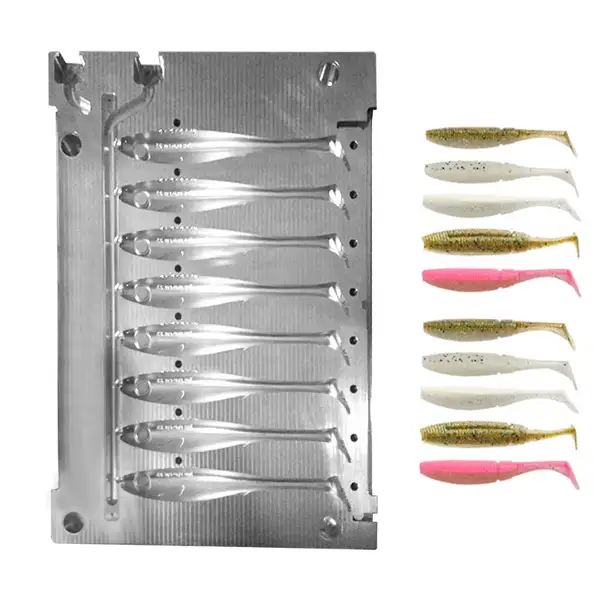
Aluminum lure molds offer excellent heat transfer, durability, and precision. CNC-machined aluminum molds are widely used in commercial soft plastic lure production.
Silicone lure mold making is popular for prototypes and short runs. These molds are affordable but wear faster and may lack fine detail.
Plastisol is heated to approximately 160–180°C (320–350°F) using equipment such as a microwave, hot plate, or dedicated plastisol heater. Even heating is critical.
Pigment, glitter, salt, and scent are mixed into the molten plastic. Stir thoroughly to ensure uniform distribution.
Open pour molds require slow, steady pouring. Injection molds require consistent pressure from an injector to avoid voids.
Molding soft plastic lures must fully cool before removal. Premature demolding can deform the soft plastic bait.
Excess flash is trimmed. Finished lures are often coated with oil or scent before storage and use.
Tail design, thickness, and material softness determine lure action and directly affect how fish react to the bait. A thin tail creates subtle vibration and lifelike movement, while thicker bodies provide stability for big fish and aggressive retrieves.
During soft lure prototyping and custom fishing lure design, adjusting tail length, layer thickness, and soft plastic bait consistency allows bait makers to fine-tune swimming action and catch performance across freshwater and saltwater environments.
Salt content, liquid plastisol density, internal cavities inside the mold, and soft lure mold temperature all influence how a lure sinks, floats, or glides. Adjusting salt ratios by the gallon, modifying bait mold cavities, or adding internal air pockets helps control sink rate for different fishing styles.
Proper balance is essential during soft plastic lure testing and small batch molding soft plastic lures production to ensure consistent action and reliable results in real fishing conditions.
Ultra-soft lures deliver superior action and texture control but sacrifice durability and tear resistance. Harder formulations increase soft plastic bait durability but may reduce realism.
By adjusting plastisol recipes, mixing different materials, and controlling appropriate temperature during plastisol soft bait molding, lure makers can strike the right balance between flexibility and longevity for both hobby and commercial use.
Soft plastic lures must be designed around hook placement to ensure solid hookups and reduce missed strikes. Features such as hook slots, flat backs, reinforced sections, or seal-friendly channels improve weedless rigging and durability. Proper hook alignment inside the mold is a key factor in custom mold design and soft lure shape customization for tournament anglers and professional fishermen.
Air bubbles are a common soft lure molding defect caused by cold plastisol, incorrect injection speed, or poor venting inside the mold. Maintaining appropriate temperature, stirring thoroughly, and using consistent pressure with soft lure injection tools helps eliminate trapped air and improve surface finish.
Incomplete fills often result from insufficient heat, poor mold release, or inadequate mold cavity design. Proper soft lure mold temperature control, correct injection technique, and regular soft bait mold maintenance ensure liquid plastisol flows evenly and fills all fishing lure mold cavities completely.
Burnt plastisol occurs when the liquid chemical overheats, leading to yellowing, odor, and brittle texture. Always use a microwave or heating equipment in a well-ventilated area, monitor temperature carefully, wear a glove for safety, and avoid prolonged exposure to high heat during hand-pouring or injection.
Excess flash is caused by poor mold alignment, excessive injection pressure, or worn molds. This excess material must be trimmed, increasing production time and cost. Precision aluminum molds, CNC machining, and correct pressure adjustment help reduce flashing and improve high-quality results.
As lure makers move from DIY and garage production to commercial soft bait manufacturing equipment, upgrades become essential. Commercial setups often include multi-cavity aluminum molds, automated or pneumatic injectors, temperature-controlled heating units, and dedicated soft bait production workflow systems for consistent output.
Maintaining consistency in weight, color, texture, and scent infusion is critical for brand trust. Commercial soft plastic lure prototyping and testing ensure every batch meets durability, action, and visual standards before being released as new products available on the market.
Soft plastic lures should be sealed in proper containers to prevent drying, oil loss, or color bleeding. Using appropriate storage containers and keeping lures dry and separated by color helps maintain soft plastic bait curing quality and shelf life.
Manufacturers must follow chemical handling guidelines, label materials correctly, and ensure safe working conditions. Using gloves, proper ventilation, and approved plastisol formulas is essential for safe and compliant soft bait manufacturing.
Hand-pouring offers creative freedom and is ideal for handmade baits, soft lure prototyping, and small batch lure production. Injection molding delivers speed, precision, and consistency, making it suitable for scaling soft plastic lure production. Many bait makers combine open pour and injection methods to balance flexibility, cost, and output volume.
Custom soft plastic lures allow brands to protect proprietary designs and unique lure actions. Through custom mold development, CNC-machined aluminum molds, and optimized plastisol recipes, manufacturers can control texture, scent, durability, and performance while reducing soft lure production cost and improving long-term competitiveness.
Bass fishing
Walleye and pike fishing
Saltwater inshore fishing
Tournament fishing
Recreational and hobby angling
Soft plastic fishing lures adapt easily to different techniques, water conditions, and target species, making them one of the most versatile bait categories in modern tackle.
Emerging trends include eco-friendly plastisol alternatives, advanced soft lure scent infusion systems, hybrid soft-hard bait designs, improved soft bait mold design, and micro-batch custom production. Innovations in mold temperature control, texture layering, and injection precision continue to improve catch rates and performance.
Molding soft plastic lures blends creativity, engineering, and fishing experience. Whether you are a hobbyist making baits in a garage or a manufacturer producing high-quality lures at scale, mastering soft plastic lure molding techniques delivers unmatched customization and performance.
With the right molds, materials, equipment, and production workflow, custom soft plastic lures offer consistent action, durability, and proven results. As molding soft plastic lures technology evolves, soft plastic lure molding remains one of the most effective and rewarding methods in modern fishing molding soft plastic lures manufacturing.