

Plastic injection molding is one of the most widely used manufacturing processes in the world. From everyday consumer products to complex industrial and medical components, injection molding plays a crucial role in producing high-quality plastic parts at scale. Its ability to deliver precision, consistency, and cost efficiency has made it the backbone of modern plastic manufacturing.
This complete introduction explains what plastic injection molding is, how it works, the materials used, tooling and mold types, design considerations, applications, advantages, limitations, quality control, and how to choose the right injection molding partner.
What Is Plastic Injection Molding?
Plastic injection molding is a manufacturing process in which molten plastic material is injected into a precisely engineered mold cavity under high pressure. The plastic cools and solidifies inside the mold, forming a finished part that matches the mold’s shape and dimensions.
Once the part has cooled sufficiently, the mold opens, and ejector pins release the finished component. This cycle repeats continuously, allowing thousands or even millions of identical parts to be produced with consistent quality.
Injection molding is especially well-suited for high-volume production of parts that require tight tolerances and complex geometries.

How Does Plastic Injection Molding Work?
What is plastic injection molding? Plastic injection molding is a highly efficient manufacturing process used to produce consistent, high-precision plastic parts at scale. The process can be broken down into seven distinct stages, each playing a critical role in part quality and repeatability.
1. Material Feeding
Plastic material, typically in the form of pellets or granules, is loaded into the hopper of the injection molding machine. These pellets are usually thermoplastics formulated for consistent melting and flow behavior.
2. Plasticizing and Melting
The pellets move from the hopper into a heated barrel. A rotating screw conveys the material forward while external heaters and mechanical shear gradually melt the plastic into a homogeneous molten state with controlled viscosity.
3. Metering and Shot Preparation
As the screw rotates, a precise amount of molten plastic—known as the shot size—is accumulated in front of the screw. Accurate metering ensures consistent part weight and dimensional stability from cycle to cycle.
4. Injection into the Mold Cavity
Once the shot is ready, the screw moves forward like a plunger, injecting the molten plastic into the closed mold cavity at high pressure. Proper injection speed and pressure ensure the material fills complex geometries and fine details.
5. Packing and Holding
After the cavity is filled, holding pressure is applied to compensate for material shrinkage as the plastic begins to cool. This stage is essential for preventing sink marks and internal voids.
6. Cooling and Solidification
The plastic cools and solidifies inside the mold as heat is transferred to the mold cooling system. Cooling time depends on material type, wall thickness, and mold temperature, and often determines overall cycle time.
7. Mold Opening and Ejection
Once the part has fully solidified, the mold opens, and ejector pins push the finished part out. The mold then closes, and the next injection molding cycle begins.
Key Components of an Injection Molding System
What is plastic injection molding? A plastic injection molding system is made up of several critical components that work together to produce accurate, repeatable plastic parts. Each element plays a specific role in ensuring stable processing, dimensional accuracy, and production efficiency.
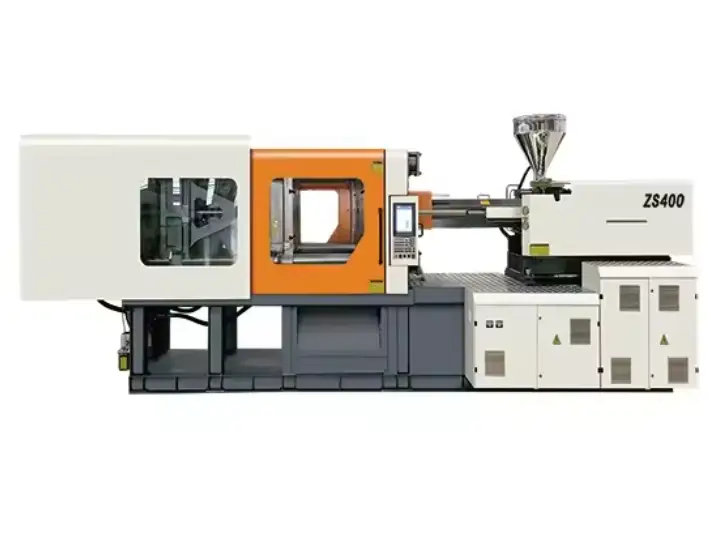
Injection Molding Machine
The injection molding machine supplies the heat, pressure, and motion required to process plastic material. It controls the entire molding cycle and ensures consistent processing conditions.
The machine is generally divided into three main sections: the injection unit, which melts and injects the plastic; the clamping unit, which securely holds the mold closed during injection; and the control system, which monitors and regulates temperature, pressure, speed, and timing throughout the process.
Injection Mold
The injection mold determines the final shape, surface finish, and structural features of the molded part. Typically manufactured from hardened steel or aluminum, the mold consists of a core and cavity that form the part geometry. It also includes a runner and gate system to guide molten plastic into the cavity, cooling channels to control solidification, and an ejection system to release the finished part after cooling.
Plastic Material
Thermoplastic resins are the most commonly used materials in injection molding. These plastics can be melted, injected, cooled, and re-melted multiple times without significant degradation, making them ideal for high-volume manufacturing and recycling.
Common Materials Used in Plastic Injection Molding
The choice of material in plastic injection molding plays a critical role in determining part performance, durability, appearance, and production cost. Materials are generally categorized into commodity, engineering, and high-performance plastics, each suited for specific applications.
Commodity Plastics
Commodity plastics are widely used for general-purpose parts due to their low cost and ease of processing. Polypropylene (PP) offers lightweight, chemical resistance, and flexibility, making it ideal for packaging, automotive, and consumer products. Polyethylene (PE) provides excellent toughness and moisture resistance, suitable for containers and industrial components. Polystyrene (PS) is rigid and inexpensive, commonly used for housings and disposable items.
Engineering Plastics
Engineering plastics offer enhanced mechanical and thermal properties for demanding applications. ABS provides strength and a high-quality surface finish for consumer electronics and automotive trim. Polycarbonate (PC) delivers exceptional impact resistance and clarity.
Nylon (PA6/PA66) is strong, heat-resistant, and suitable for structural components, while POM (Acetal) offers excellent dimensional stability, low friction, and precision for gears and mechanical parts.
High-Performance Plastics
High-performance plastics are used in extreme conditions where ordinary plastics fail. PEEK withstands high temperatures and aggressive chemicals, and PPS maintains dimensional stability in harsh industrial environments, making them ideal for aerospace, medical, and specialty applications.
Types of Injection Molds
Injection mold design is a key factor in part quality, cycle time, and production efficiency. Different molds are selected based on part complexity, cavity count, and production volume.
Two-Plate Molds
Two-plate molds are the most common and cost-effective design, ideal for simple parts with one cavity. They consist of a fixed half and a movable half, with a single parting line. The runner system guides molten plastic into the cavity, and after cooling, the mold opens to eject the part.
Three-Plate Molds
Three-plate molds provide greater flexibility in gate placement and are often used for more complex parts. The additional plate allows automatic separation of runners from the finished part, reducing secondary operations and improving overall efficiency for medium to high-volume production.
Hot Runner Molds
Hot runner molds feature heated channels that maintain the plastic in a molten state until it enters the cavities. This reduces material waste, minimizes cooling time in runners, and improves cycle efficiency, making them ideal for high-volume injection molding applications.
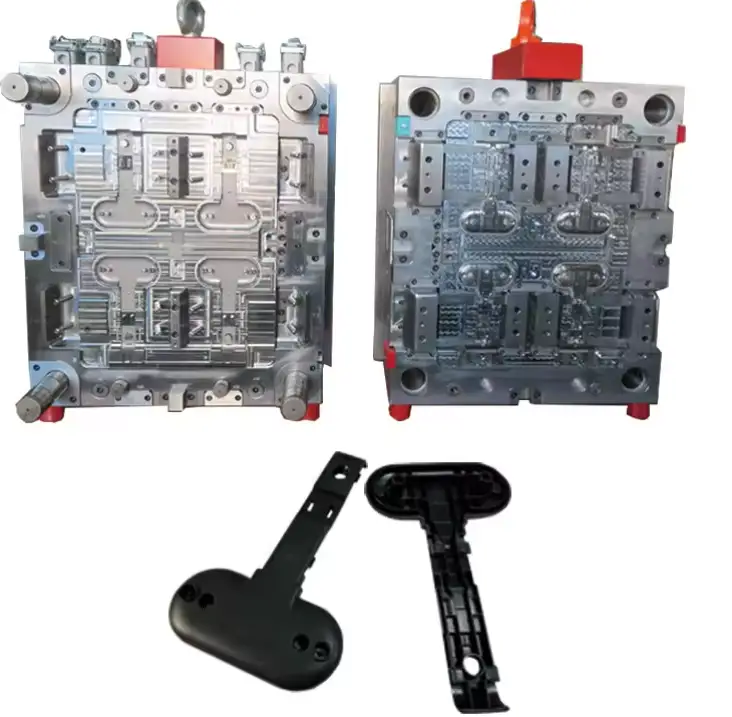
Family Molds
Family molds allow multiple different parts to be molded in a single cycle. This design optimizes production efficiency, especially for kits or assemblies that require parts with consistent tolerances and matched characteristics.
Design Considerations for Plastic Injection Molding
Effective design for plastic injection molding improves part quality, reduces production costs, and ensures consistent performance. Several key factors should be considered during the design phase.
Wall Thickness
Maintaining uniform wall thickness helps prevent warpage, sink marks, and uneven shrinkage. Typical wall thickness for most thermoplastics ranges from 1.0 to 4.0 mm, depending on the material and part size. Abrupt changes in thickness should be avoided to ensure dimensional stability.
Draft Angles
Draft angles facilitate smooth part ejection from the mold. A minimum of 1–2 degrees is recommended for most surfaces, with additional draft applied to textured or complex geometries. A proper draft reduces stress on the molded part and minimizes damage during ejection.
Ribs and Bosses
Ribs increase structural strength without adding excessive wall thickness, while bosses provide support for fasteners, screws, or inserts. Both features should be designed with adequate draft and proper proportions to avoid sink marks or voids.
Gate Location
Strategic gate placement ensures balanced plastic flow into the mold cavity, reducing flow lines, weld lines, and other defects. Gate position also affects surface finish and mechanical properties of the final part.
Radii and Fillets
Adding radii and fillets at sharp corners improves material flow, reduces stress concentration, and minimizes warping. Smooth transitions also enhance the aesthetic quality of molded components.
Material Shrinkage
Design must account for the material’s polypropylene shrinkage rate or other thermoplastic contraction during cooling. Compensating for shrinkage ensures dimensional accuracy and tight tolerances.
Venting
Proper venting allows trapped air and gases to escape from the mold cavity during injection. This prevents burn marks, voids, and incomplete filling, particularly in complex or deep sections.
Advantages of Plastic Injection Molding
What is plastic injection molding? Plastic injection molding is a versatile and widely used manufacturing process, offering multiple advantages for producing high-quality parts at scale.
High Production Efficiency
Once the injection mold is completed, parts can be produced quickly and consistently with minimal manual labor. The process is highly automated, allowing for rapid cycles and large-volume production, making it ideal for mass manufacturing of thermoplastic components.
Consistent Quality
Injection molding provides excellent repeatability and dimensional accuracy. Each part produced from the same mold maintains consistent geometry, wall thickness, and surface finish. This reliability reduces scrap rates and supports quality-critical applications such as automotive, medical, and consumer products.
Complex Part Geometry
The process allows intricate designs with undercuts, thin walls, ribs, bosses, and integrated features to be molded in a single cycle. Plastic injection molding enables the production of complex components that would be difficult or impossible to manufacture with other methods.
Cost-Effective for High Volumes
Although the initial cost of tooling and mold fabrication is significant, the per-part cost decreases substantially with high production volumes. This makes injection molding particularly economical for large-scale manufacturing runs.

Limitations of Plastic Injection Molding
Despite its many advantages, plastic injection molding has several limitations that must be considered during planning and design.
High Initial Tooling Cost
Precision molds are expensive to design and manufacture, representing a major upfront investment for production.
Long Lead Time for Tooling
Creating a high-quality mold may take several weeks to months, which can delay project timelines for new products.
Costly Design Changes
Once a mold is fabricated, making significant design modifications is expensive and may require a complete mold redesign, increasing both time and cost.
Applications of Plastic Injection Molding
What is plastic injetion molding? Plastic injection molding is one of the most versatile manufacturing processes, serving a wide range of industries due to its efficiency, precision, and ability to produce complex parts.
Consumer Products
Injection molding is widely used in consumer goods manufacturing. It produces packaging, household items, and electronics housings with consistent quality and detailed features. The process allows lightweight, durable, and aesthetically pleasing components suitable for everyday use.
Automotive Industry
In the automotive sector, injection molding creates interior and exterior parts, clips, connectors, and under-hood components. Materials like PP, ABS, and reinforced thermoplastics provide the required mechanical strength, chemical resistance, and dimensional stability for automotive applications.
Medical Devices
Plastic injection molding is critical for medical devices and healthcare products. It is used to manufacture syringes, diagnostic housings, disposable components, and other precision parts that require high cleanliness standards, biocompatibility, and tight tolerances.
Industrial and Electrical Applications
Industrial and electrical sectors rely on injection molding for enclosures, insulating components, and precision mechanical parts. The process supports mass production of durable, high-performance plastic components with consistent quality and complex geometries.
Quality Control in Plastic Injection Molding
Quality control is a critical aspect of plastic injection molding, ensuring that each injection-molded part meets design specifications, functional requirements, and industry standards. Robust quality management minimizes defects, reduces waste, and maintains production consistency across high-volume runs.
Dimensional Inspection
Precision measurement tools, such as coordinate measuring machines (CMMs) and calibrated gauges, are used to verify that molded parts conform to specified tolerances. Dimensional inspection ensures proper fit, function, and assembly compatibility, particularly for complex geometries and multi-component systems.
Visual Inspection
Visual checks identify surface defects such as flash, sink marks, short shots, flow lines, or discoloration. Early detection of surface imperfections helps prevent defective products from reaching end-users and allows adjustments in processing conditions or mold design.
Process Monitoring
Continuous monitoring of injection pressure, melt and mold temperature, screw speed, and cycle time ensures stable and repeatable molding conditions. Maintaining consistent processing parameters reduces part variability and improves overall quality.
Material Traceability
Using certified and traceable thermoplastic resins guarantees compliance with industry standards and regulatory requirements. Material traceability ensures that any issues with part performance can be linked back to specific batches of plastic material, supporting accountability and quality assurance in high-volume production.
Injection Molding vs Other Manufacturing Processes
What is plastic injection molding? Plastic injection molding is a highly versatile manufacturing method, but understanding how it compares to other production techniques helps manufacturers select the most suitable process for their needs.
Injection Molding vs CNC Machining
Injection molding excels in high-volume production, delivering consistent plastic components with excellent dimensional accuracy and surface finish. In contrast, CNC machining is more appropriate for low-volume runs or prototypes, where flexibility and rapid iteration are priorities. CNC is slower and more labor-intensive for large quantities, making injection molding more cost-effective at scale.
Injection Molding vs Blow Molding
While injection molding produces solid parts with precise geometries, blow molding is designed for creating hollow, thin-walled containers such as bottles and tanks. Injection molding allows more complex features, integrated ribs, bosses, and living hinges, whereas blow molding is limited to simple hollow shapes.
Injection Molding vs 3D Printing
3D printing is ideal for prototyping and small batch production due to its flexibility and minimal tooling requirements. However, injection molding provides superior mechanical strength, surface finish, and repeatability for mass production.
It also supports a wider range of materials, including thermoplastic polymers, reinforced plastics, and high-performance resins, making it the preferred choice for functional and high-volume parts.
By understanding these differences, designers and engineers can choose the most cost-effective and efficient manufacturing method based on production volume, part complexity, material requirements, and desired mechanical properties.

Choosing the Right Plastic Injection Molding Manufacturer
Selecting the right injection molding partner is crucial to ensure high-quality, cost-effective, and reliable production. A capable manufacturer not only produces parts but also supports the entire development process, from material selection to final delivery.
Material Selection Support
A knowledgeable partner provides guidance on choosing the appropriate thermoplastic polymer, considering mechanical properties, chemical resistance, thermal characteristics, and application requirements. Proper material choice is essential for part performance, durability, and cost efficiency.
Mold Design and Tooling Expertise
Experienced manufacturers offer comprehensive mold design services, including PP mold design, runner and gate optimization, and polypropylene mold flow analysis. Efficient tooling ensures proper filling, minimal defects, and smooth production cycles.
DFM Analysis and Quality Assurance
Design for manufacturability (DFM) reviews identify potential issues early, reducing the risk of defects such as sink marks, warpage, or poor surface finish. Strict quality control systems monitor dimensions, process stability, and material traceability to maintain consistent production standards.
Stable Production Capacity and Industry Experience
A reliable manufacturer provides stable, high-volume production and has experience serving your specific industry, whether automotive, medical, consumer products, or industrial applications. Early collaboration with the manufacturer minimizes development time, lowers costs, and ensures smoother scaling from prototyping to mass production.
Future Trends in Plastic Injection Molding
What is plastic injection molding? The plastic injection molding industry continues to advance rapidly, driven by technological innovation, sustainability goals, and evolving manufacturing demands. Key trends are shaping the future of the sector.
Automation and Robotics
Automation is increasingly integrated into injection molding operations. Robotic arms handle part removal, assembly, and secondary operations, reducing labor costs, improving cycle times, and minimizing human error. Fully automated lines support high-volume production while maintaining consistent quality for complex plastic components.
Smart Molds and Real-Time Monitoring
The adoption of smart molds equipped with sensors and IoT connectivity enables real-time monitoring of temperature, pressure, and material flow. These technologies allow manufacturers to detect defects early, optimize PP injection molding parameters, and ensure tighter tolerances, improving overall efficiency and reducing scrap rates.
Lightweight Materials
Demand for lightweight, high-performance plastics is growing, particularly in automotive, aerospace, and consumer electronics. Injection molding with engineered polymers and composites allows manufacturers to reduce part weight without compromising strength or durability.
Recycled and Bio-Based Plastics
Sustainability initiatives are driving the increased use of recycled polypropylene and bio-based thermoplastics. Manufacturers are incorporating environmentally friendly materials into plastic injection molding processes, balancing performance with reduced environmental impact and meeting evolving regulatory requirements.
These trends highlight the ongoing evolution of injection molding toward more efficient, sustainable, and technologically advanced manufacturing.
Conclusion
What is plastic injection molding? Plastic injection molding is a cornerstone of modern manufacturing, enabling the mass production of high-quality plastic parts with precision and efficiency. By understanding the process, materials, design principles, and applications, businesses can make informed decisions and fully leverage the benefits of injection molding.
Whether for consumer goods, automotive components, medical devices, or industrial products, plastic injection molding remains one of the most reliable and cost-effective manufacturing solutions available today.