

Insert molding injection is an advanced injection molding technique that integrates a metal or rigid insert directly into a mold during the molding process. As molten plastic is injected into the cavity, it flows around the insert, forming a single, fully bonded structure.
This insert-molded approach allows manufacturers to combine multiple materials in one cycle, eliminating secondary operations and improving overall part performance.
Unlike plastic injection molding that produces single-material components, injection molding with inserts creates reinforced parts with higher strength, stability, and functional integration.
When compared with overmolding, insert molding embeds the insert during the primary molding cycle, highlighting the key differences between overmolding and insert molding. Because of this, many manufacturers use insert molding for applications where reliability and mechanical integrity are critical.
Modern insert molding services support a wide range of applications usinginsert injection molding and plastic insert molding technologies. From automotive and electronics to medical, industrial, and consumer products, the insert molding injection process enables consistent quality, efficient production, and scalable manufacturing.
This guide explains how insert molding works, how it differs from standard injection molding, and why it plays a vital role in today’s advanced manufacturing environments.
What Is Insert Molding Injection?
Insert molding injection is a specialised form of the injection molding process in which pre-manufactured inserts—most often metal—are positioned inside a mold cavity before molding begins. During the cycle, molten thermoplastic resin is injected to form a plastic part, flowing evenly around the insert and locking it in place as the material cools and solidifies. This creates a permanent bond between materials without the need for secondary assembly.
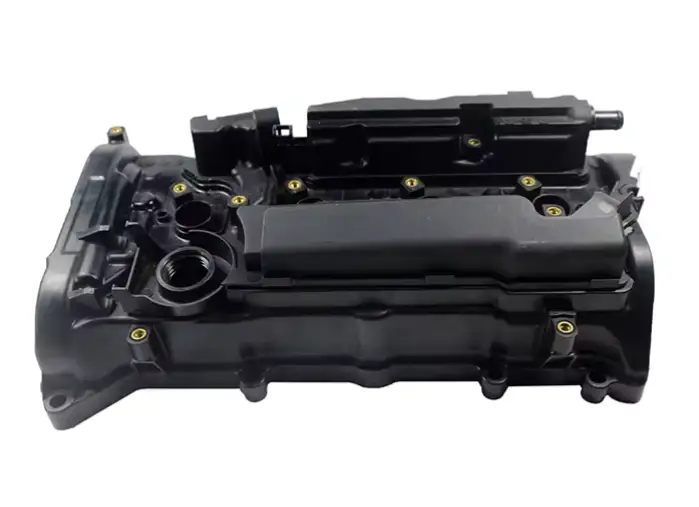
In insert injection molding, accurate insert placement in injection molding is critical to achieving consistent strength and dimensional accuracy. Proper molding design, combined with well-engineered insert molding tooling design and insert molding mold design, ensures uniform material flow and reliable encapsulation of the insert.
Often discussed alongside plastic molding, injection molding, and insert molding differ in that insert molding integrates reinforcement during the primary cycle rather than adding components afterward. The completed insert molded parts combine the structural strength of metal with the flexibility and design freedom of plastic, making the insert molding process ideal for high-performance, multi-material components used across demanding industries.
Insert Molding Injection in Modern Manufacturing
Insert molding injection has become an essential manufacturing process in modern production environments because it combines multiple materials in a single cycle while eliminating post-mold assembly. By embedding a metal insert directly into a part, manufacturers achieve superior mechanical strength, reliable electrical performance, and long-term durability. As molten thermoplastic resin flows around the insert, it forms a permanent bond that resists vibration, loosening, and fatigue.
Manufacturers adopt this process when plastic alone cannot meet structural requirements, when metal components—such as threaded inserts or conductive elements—must remain securely fixed, or when traditional assembly creates cost and quality risks. Applications requiring stable thread engagement frequently rely on insert molding for threaded inserts, while electrical insert injection molding and insert molding for connectors support safe, consistent electrical interfaces.
Compared with alternative molding methods, insert molding delivers clear advantages of insert molding, including reduced part count and improved repeatability. Unlike parts that are simply overmolded, insert molding integrates the insert during the primary cycle. Today’s molding services offer a wide range of insert molding solutions, supporting high-volume production such as automotive insert molding injection, and other performance-critical applications.
Insert Molding Injection Process Explained
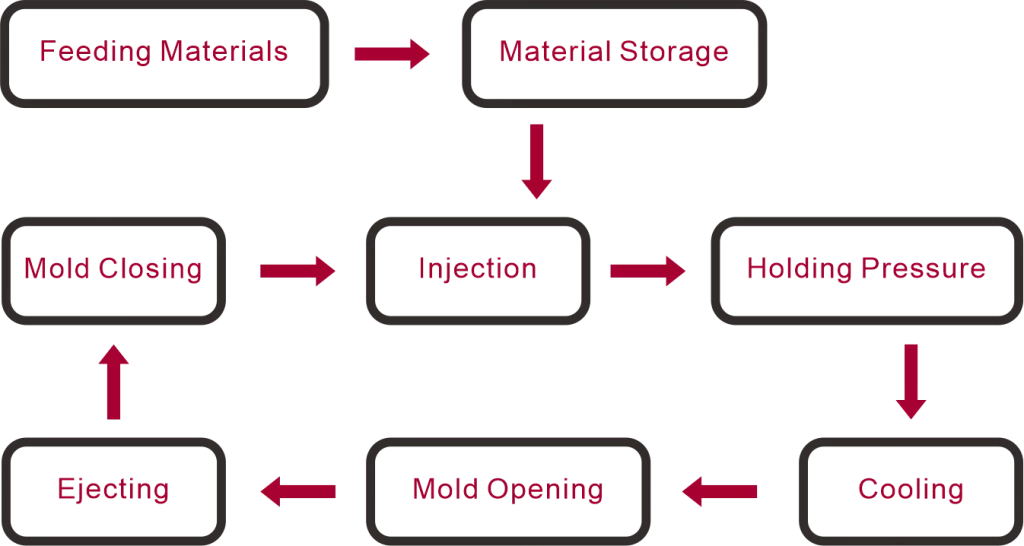
To fully understand the insert molding injection process, it is important to review each stage and how it contributes to part quality, performance, and design flexibility. Because insert molding is used to permanently bond metal and plastic, precise control is required at every step.
1. Insert Preparation
Inserts are produced separately and prepared before molding. Preparation may include cleaning, degreasing, surface texturing, or knurling to improve mechanical locking with the plastic substrate. In some applications, inserts are pre-heated to reduce thermal shock during plastic injection. Proper preparation supports stable bonding and reduces defects in thermoplastic insert molding, including nylon insert injection molding and ABS insert molding injection.
2. Insert Placement in the Mold
Prepared inserts are positioned inside the mold cavity before injection. Placement can be manual for complex geometries or small runs, semi-automated, or fully robotic for high-volume production. Accurate placement within the cavity is critical, especially for parts requiring precise alignment, such as connectors, fasteners, or medical components. Even small features, such as a knob or threaded element, depend on consistent positioning when using insert molding.
3. Plastic Injection Around Inserts
During molding, molten plastic is injected under controlled pressure and temperature, flowing around the insert to encapsulate it. Advanced insert molding temperature control ensures uniform flow and prevents voids or insert shift. This step differs from overmold or two-shot / double injection molding, where material is added in a secondary cycle.
4. Cooling, Ejection, and Inspection
As the plastic cools, it forms a secure mechanical lock around the insert. Uniform cooling prevents stress and warpage. Final insert molding quality control verifies alignment, surface quality, and dimensional accuracy. This process supports a wide range of types of plastic and is widely applied in automotive, electronics, and medical devices manufacturing.
Insert Molding Injection vs Standard Injection Molding
Understanding the differences between insert molding injection and standard injection molding helps manufacturers choose the most effective process for their application. While both are widely used plastic manufacturing methods, they serve different design and performance requirements.
Insert molding injection is specifically selected when integrated strength, multi-material functionality, and reduced assembly are critical to product success.
| Feature | Insert Molding Injection | Standard Injection Molding |
|---|---|---|
| Inserts integrated | Yes, metal or rigid inserts are molded in | No inserts included |
| Secondary assembly | Eliminated | Often required |
| Structural strength | High due to insert reinforcement | Moderate, plastic-only |
| Tooling complexity | Higher due to the insert placement | Lower and simpler |
| Part functionality | Multi-material, integrated features | Single-material plastic parts |
In practice, insert molding injection is chosen when added strength, electrical functionality, or long-term reliability is required, while standard injection molding remains suitable for simpler plastic components.
Insert Molding Injection Applications
Insert molding injection is widely adopted across industries where mechanical performance, reliability, and production efficiency are essential. In insert molding manufacturing, inserts are positioned within specific parts of the mold, and plastic into a mold flows around them to form a single, integrated component.
Compared with a two-shot process or two-shot injection molding, insert molding typically uses a two-step process—insert placement followed by injection—making it ideal for large production runs.
Automotive Applications
Common examples of insert molding in automotive include electrical connectors, sensor housings, threaded mounting components, and structural fasteners. By combining plastic with the strength of metal, insert molding supports lightweight designs without sacrificing durability. This is why insert molding is often selected for high-volume automotive parts.
Electronics and Electrical Components
Electrical terminals, insulated conductive parts, and insert molding for connectors benefit from precise insert positioning and stable electrical performance. A controlled process ensures reliable contact and consistent surface finish.
Medical Device Manufacturing
Surgical handles, diagnostic housings, and medical connectors rely on successful insert molding to reduce assembly steps and minimise contamination risk.
Industrial and Consumer Products
Load-bearing brackets, tool housings, appliances, and handheld tools are commonly produced using custom insert molding injection. Working with an experienced insert molding injection manufacturer or insert molding injection supplier ensures high-quality insert molding injection services and repeatable results across diverse applications.
Insert Molding Injection Materials
Plastic Materials Used
Common thermoplastics include:
- Nylon (PA6, PA66)
- ABS
- Polycarbonate (PC)
- PBT
- PPS
- Polypropylene (PP)
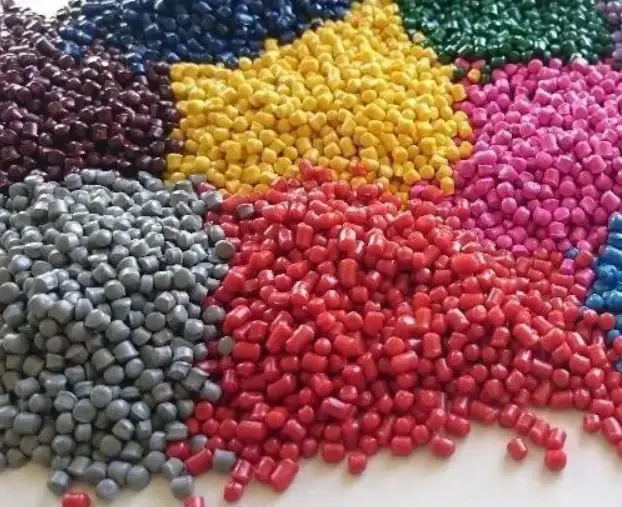
These plastics are widely used across different types of injection molding because they offer a balance of strength, heat resistance, and process stability. In insert molding, they flow around metal parts before the mold opens, forming a secure combination of metal and plastic.
Material selection depends on mechanical requirements, temperature resistance, and chemical exposure, especially for demanding applications such as automotive parts. Typical examples of insert molding applications include housings, connectors, and structural components.
Insert Materials
Common insert materials include:
- Brass
- Stainless steel
- Aluminum
- Carbon steel
- Copper alloys
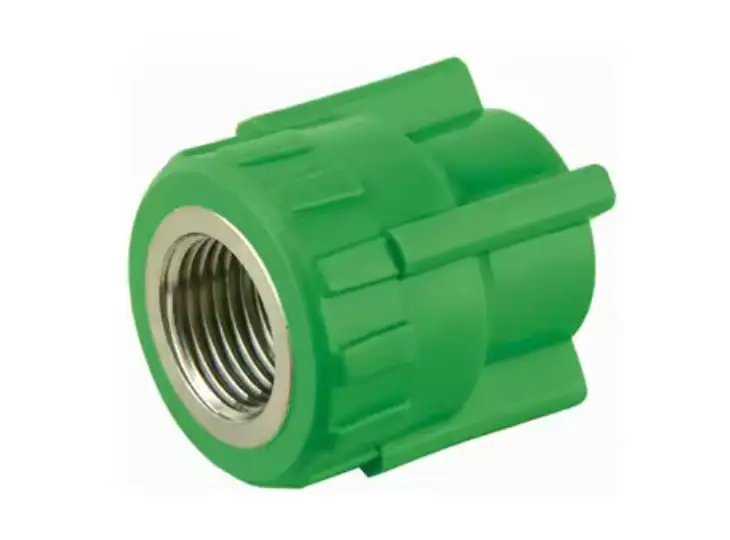
These insert components may take the form of threaded inserts, pins, terminals, or bushings. Proper material compatibility is critical to ensure strong bonding, dimensional stability, and long-term durability. This is particularly important in insert molding and overmolding, where differences in thermal expansion and adhesion can directly impact performance and product lifespan.
Automation in Insert Molding Injection
Automation plays an increasingly important role in modern insert molding injection, especially in high-volume design and manufacturing environments.
Automated systems ensure each insert is placed accurately and consistently before the molding cycle begins. During production, metal or composite components are placed into the mold by robotic arms, reducing human error and improving repeatability throughout the injection phase.
Once the insert is placed, thermoplastic injection occurs, flowing material precisely around the insert to form a unified part. This process highlights how insert molding is injection molding with added integration benefits. Insert molding allows manufacturers to reduce secondary assembly steps, which helps control insert molding injection cost over long production runs.
Key automation benefits include higher consistency, reduced labor costs, faster cycle times, and lower defect rates. Automated handling also improves tool life and efficiency in insert molding injection tooling, ensuring stable, repeatable output.
Compared with insert molding vs overmolding injection, automation is especially valuable when inserts must be accurately positioned, making insert molding ideal for complex, high-precision components.
Insert Molding Injection Quality Control
Professional insert molding injection relies on strict quality control to ensure consistent, high-performance parts. Insert molding is often used in applications where precision, strength, and long-term reliability are critical, especially within processes like injection molding that demand tight tolerances.
Common QC Measures
- Incoming insert inspection to verify material grade, dimensions, and surface condition
- In-process monitoring to control temperature, pressure, and insert molding cycle time
- Dimensional measurement using gauges, CMM, or optical inspection
- Functional testing and pull-out testing to confirm bonding strength and load resistance
These quality checks are frequently integrated with insert molding automation, allowing real-time detection of defects and process deviations. While overmolding is often selected for surface enhancement or ergonomic features, insert molding vs overmolding is determined by structural and functional requirements. For parts requiring internal reinforcement, molding is best achieved through insert molding.
By maintaining strict inspection standards, manufacturers ensure molding best practices are followed, delivering insert molded components that consistently meet design specifications and performance expectations.
Custom Insert Molding Injection Solutions
Many products require custom insert molding injection to meet specific mechanical, thermal, and functional performance targets. In modern manufacturing, insert molding in injection molding enables the integration of metal and plastic into a single, high-strength component, reducing assembly steps and improving reliability.
This approach is widely used to produce complex injection-molded parts across automotive, electronics, medical, and industrial sectors.
Custom solutions may include:
- Specialized tooling designed for repeatable insert positioning
- Unique insert designs to improve strength, conductivity, or fastening performance
- Custom material combinations, such as engineering plastic insert molding for high-load applications
- Process optimization to improve consistency and reduce cycle time
Advanced materials are often selected based on application demands, including polypropylene insert molding for lightweight, cost-sensitive parts and PEEK insert molding injection for high-temperature or chemically aggressive environments. For structural reinforcement, metal insert injection molding provides excellent durability and load-bearing capability.
By optimizing the entire insert molding manufacturing process, custom insert molding services deliver precise, application-specific solutions with consistent quality and long-term performance.
Future Trends in Insert Molding Injection Technology
Insert molding injection technology continues to advance as manufacturers pursue higher efficiency, precision, and integration. One major trend is the improvement of insert molding machine setup, with faster changeovers, more accurate insert positioning, and greater process stability. These enhancements directly support high-volume production while maintaining tight tolerances.
Another key development is the use of advanced materials that expand performance beyond conventional plastics. When comparing insert molding vs traditional injection molding, insert molding offers the advantage of combining multiple components into a single molded part, reducing secondary operations. This also highlights insert molding vs assembly, where molding eliminates fasteners, adhesives, and manual labor.
Smart manufacturing systems are also transforming production lines. Real-time monitoring, data-driven process control, and predictive maintenance improve consistency and reduce downtime. Together with increased automation and precision tooling, these systems maximize the benefits of insert molding injection, including stronger part integrity, lower overall production costs, and improved design flexibility.
As these trends continue, insert molding injection will play an even greater role in manufacturing complex, high-performance components across multiple industries.
Conclusion
Insert molding injection is a proven manufacturing solution that enables strong metal insert bonding by integrating rigid inserts directly into plastic parts. Through plastic-metal insert molding, manufacturers eliminate secondary assembly steps while improving structural strength, precision, and long-term reliability.
This process is widely used for industrial insert molded components that demand durability and consistent performance, as well as for medical insert molding injection, where accuracy and repeatability are critical.
By understanding how insert molding works, how it differs from other molding methods, and how to design parts correctly, manufacturers can achieve efficient, repeatable production. When applied properly, insert molding injection remains one of the most valuable technologies in advanced injection molding.