

Insert molding design plays a critical role in determining the performance, reliability, and cost of insert molded parts.
While the insert molding process offers clear advantages—such as improved strength and reduced assembly—successful results depend heavily on proper design from the earliest stages of product development.
This guide explains the basics of insert molding design, including insert selection, part geometry, material compatibility, tooling considerations, and common design mistakes to avoid.
Understanding Insert Molding Design
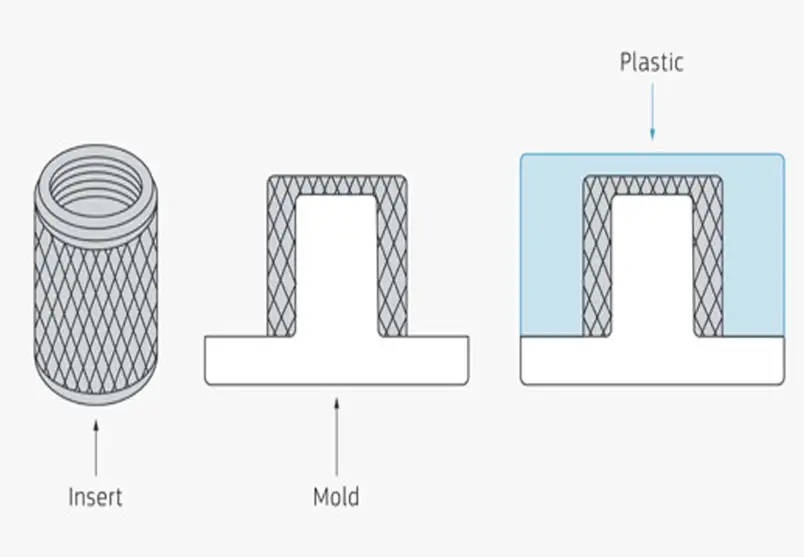
Insert molding is a manufacturing process where metal or rigid inserts are placed into an injection mold and encapsulated with molten plastic. Unlike post-mold assembly, the insert becomes a permanent part of the molded component.
Because multiple materials are combined in a single process, insert molding design requires careful coordination between part geometry, material behavior, and tooling constraints.
Why Insert Molding Design Matters
Poor insert molding design can lead to:
- Insert movement or misalignment
- Cracking due to thermal stress
- Weak insert retention
- Cosmetic defects
- Higher tooling and production costs
Good design, on the other hand, improves part performance, manufacturing stability, and long-term reliability.
Insert Selection and Geometry
Choosing the Right Insert Material
Common insert materials include:
- Brass
- Stainless steel
- Aluminum
- Carbon steel
- Copper alloys
Material selection should consider strength requirements, corrosion resistance, and compatibility with the chosen plastic.
Insert Geometry for Retention
Insert geometry is one of the most important design factors.
Best practices include:
- Knurled surfaces to prevent rotation
- Undercuts or grooves to improve pull-out strength
- Rounded edges to reduce stress concentration
Smooth inserts without mechanical features rely only on shrinkage for retention, which is often insufficient for structural applications.
Plastic Material Selection
The plastic material must be compatible with both the insert and the application environment.
Common Plastics Used in Insert Molding
- Nylon (PA6, PA66)
- ABS
- Polycarbonate (PC)
- PBT
- PPS
Material selection affects flow behavior, shrinkage, thermal expansion, and long-term durability.

Managing Thermal Expansion Differences
Metal and plastic expand and contract at different rates. This mismatch can create internal stress during cooling.
Design strategies to manage thermal stress include:
- Allowing sufficient plastic thickness around inserts
- Avoiding sharp corners near inserts
- Using materials with compatible thermal properties
Ignoring thermal expansion can lead to cracking or insert loosening over time.
Wall Thickness and Part Geometry
Maintain Uniform Wall Thickness
Consistent wall thickness promotes even plastic flow and cooling, reducing the risk of warpage or voids.
Sudden thickness changes near inserts should be avoided whenever possible.
Insert Placement Within the Part
Inserts should be positioned to allow:
- Balanced plastic flow
- Adequate encapsulation
- Structural support
Inserts placed too close to part edges may cause cosmetic defects or weak areas.
Gate Location and Plastic Flow
Proper gate placement is essential in insert molding design.
Poor gate location can cause:
- Incomplete encapsulation
- Weld lines near inserts
- Air traps or voids
Gates should be positioned so molten plastic flows evenly around the insert, fully surrounding it before cooling begins.

Tolerance and Alignment Considerations
Insert molding can achieve tight tolerances, but expectations must be realistic.
Designers should:
- Specify only necessary tight tolerances
- Allow tolerance stack-up between insert and plastic
- Understand that metal and plastic behave differently during molding
Over-constraining tolerances often increases tooling complexity and cost.
Insert Molding Tooling Considerations
Insert Retention in the Mold
Tooling must securely hold inserts in place during injection.
Common methods include:
- Mechanical pins or pockets
- Magnetic retention
- Robotic placement systems
Secure retention prevents insert shift during molding.
Automation vs Manual Loading
Design should consider production volume.
- Manual loading works for low volumes
- Automated insert placement improves consistency and throughput for high volumes
Tooling design must support the chosen method.
Draft Angles and Ejection
Draft angles are required for part ejection but must be carefully designed around inserts.
Insufficient draft can cause:
- Part sticking
- Insert damage
- Tool wear
Designers should balance functional geometry with manufacturability.
Common Insert Molding Design Mistakes
Insufficient Plastic Coverage
Thin plastic layers around inserts reduce strength and increase cracking risk.
Over-Complex Insert Shapes
Highly complex inserts increase cost and placement difficulty.
Ignoring Flow Simulation
Skipping mold flow analysis often leads to unexpected defects in insert molded parts.
Designing Without Manufacturing Input
Insert molding design should always involve tooling and process experts early.
Design for Quality and Reliability
Good insert molding design supports consistent quality.
Key practices include:
- Designing for repeatable insert placement
- Allowing process variation
- Including inspection features
Quality is built into the design, not added later.
Insert Molding Design vs Overmolding Design
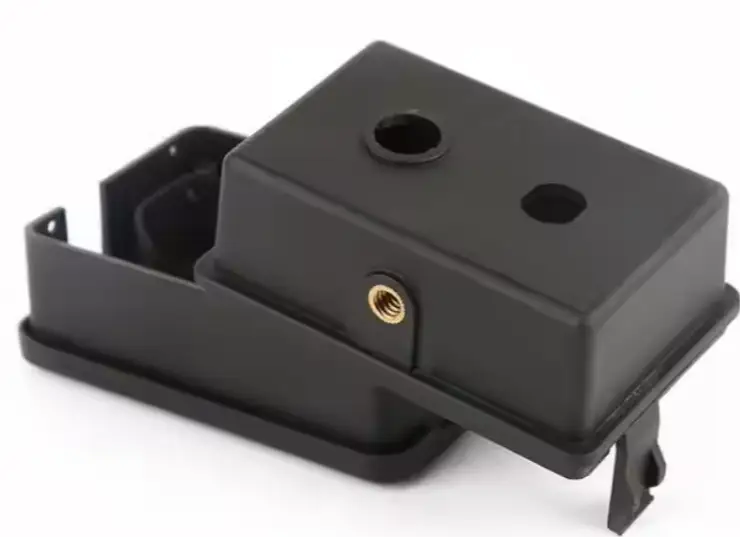
Insert molding design focuses on structural and functional integration, while overmolding design often emphasizes ergonomics or sealing.
Understanding this difference helps select the right process and design approach.
When to Use Insert Molding Design
Insert molding design is ideal when:
- High pull-out strength is required
- Electrical or mechanical inserts are needed
- Assembly must be eliminated
- Long-term durability matters
For simpler applications, standard injection molding may be sufficient.
Conclusion
Insert molding design is the foundation of successful insert molded parts. By carefully considering insert geometry, material compatibility, wall thickness, tooling, and tolerances, manufacturers can achieve reliable, high-performance components with minimal risk.
Understanding the basics of insert molding design helps engineers avoid costly mistakes, reduce production issues, and maximize the benefits of this powerful manufacturing process.